


Enhancing buildings with reliable post-tensioning systems and support. Committed to safety, value, and collaborative project success.

Get in touch
(253) 737-5167
130 37th St NE Auburn, WA 98002, USA
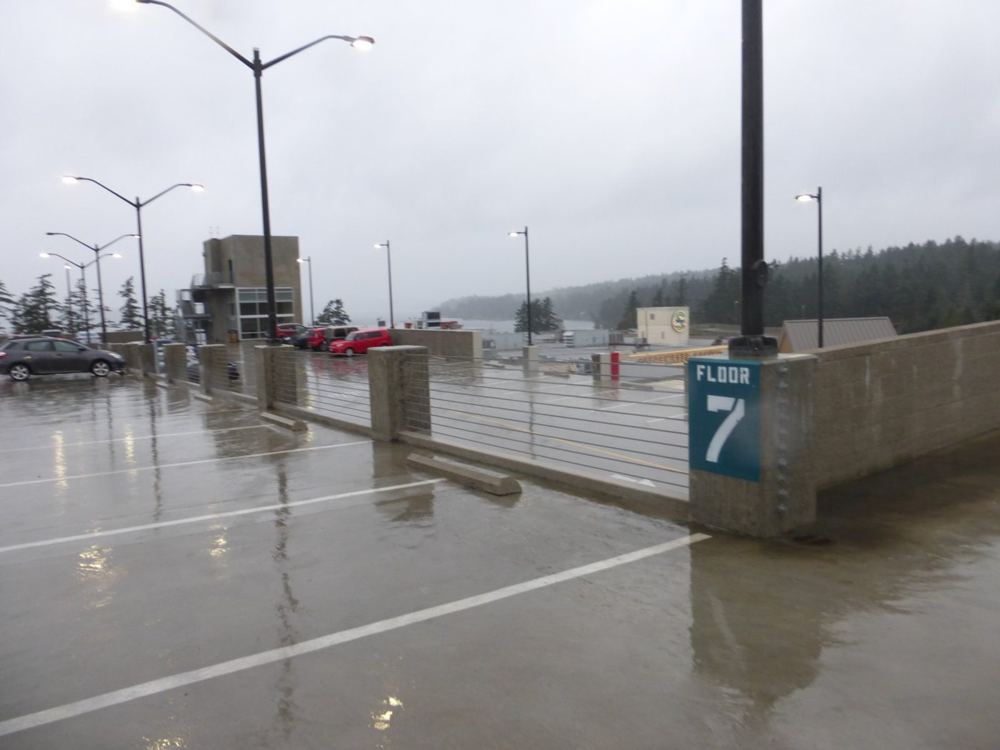
Barrier Cable Repair and Installation for Parking Garages: Why Span Length and Anchorage Decide Everything

by Post Tensioning Solutions
Our crews have walked a lot of parking decks. Some brand new, some fifty years old and tired. And we can tell the moment a garage has a problem. Walk up to the edge, grab a barrier cable, and pull. If it moves in your hand like a clothesline in the backyard, that cable is not going to stop a car. It is going to slow one down on its way over the side.
Here is the thing most people never think about. The owner of that garage has usually done a lot right. They have kept the lights on, patched the concrete, restriped the stalls, and kept a building running for decades. They have put real money and real years into that structure. The barrier cable is just the piece nobody told them to look at until something went wrong.
That is where we come in. At Post Tensioning Solutions, barrier cable repair, retrofit, and new barrier cable installation is what we do, and we do it the right way. Here is what the right way actually looks like, and why it matters more than most people realize.
See it explained live on Wednesday 18 November. Save your seat.
A Barrier Cable Only Has One Job
A barrier cable system in a parking structure does its job or it does not. There is no partial credit. The difference between those two outcomes is a vehicle stopped at the edge, or a vehicle over the edge, a life changed forever, and a liability claim that follows the owner for years.
The building code takes this seriously. The International Building Code, through ASCE 7, requires vehicle barriers in parking garages to resist a 6,000 pound horizontal load applied between 18 and 27 inches above the deck. That is not a suggestion. That is the minimum a barrier has to hold, and a barrier cable only hits that number when the span, the tension, and the anchorage are all right at the same time.
Barrier cable systems are some of the most underestimated life safety components in the built environment. They look simple. Seven or eight strands of steel strand running post to post. They are not simple. And the contractors who treat them like a fence job are the ones whose clients end up in front of a lawyer.
Span Length: The Variable Most Barrier Cable Contractors Never Measure
If you only take one thing away from this article, take this. The single most important number in any barrier cable repair or retrofit is span length. That is the distance between posts, columns, or anchorage points.
Span length drives everything else:
-
The cable tension the system needs
-
How far the cable deflects when a car hits it
-
The post embedment and anchorage design
-
Whether the system stops the vehicle or lets it push through
A short span in a tight, low clearance garage behaves nothing like a long span on an open deck. A cable tensioned correctly for a 10 foot span will be dangerously under tensioned across a 20 foot span. If a contractor swaps in new cable without recalculating tension for the actual field measured span, that is not a repair. That is a liability sitting there waiting for a bad day.
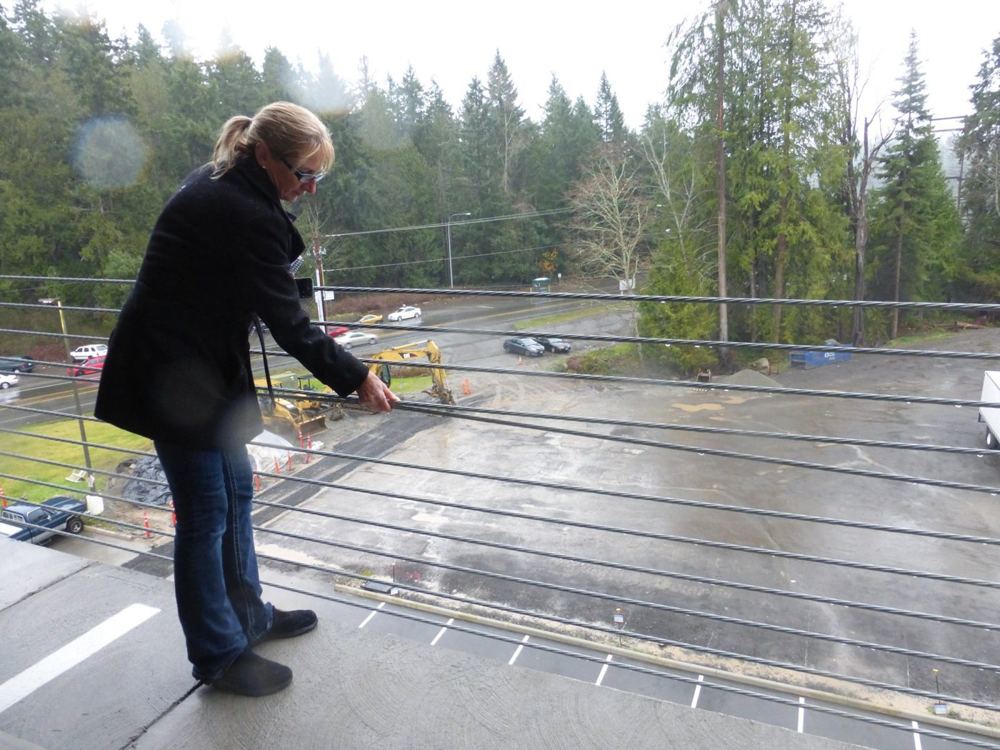
Checking cable tension by hand during a field inspection. If it moves like this, it will not stop a car.
Older Parking Garages Are Never Uniform
Existing structures make the span problem worse. In older parking garages, post spacing was rarely uniform to begin with. Columns shift the geometry. Past repairs added anchorage that does not match anything else on the deck. Spandrel beams and edge conditions change floor to floor and bay to bay.
We have walked decks with missing strands, crossed cables, cut cables inside the tubes, and anchors that somebody tried to fix with the wrong hardware. None of that shows up on the original drawings.
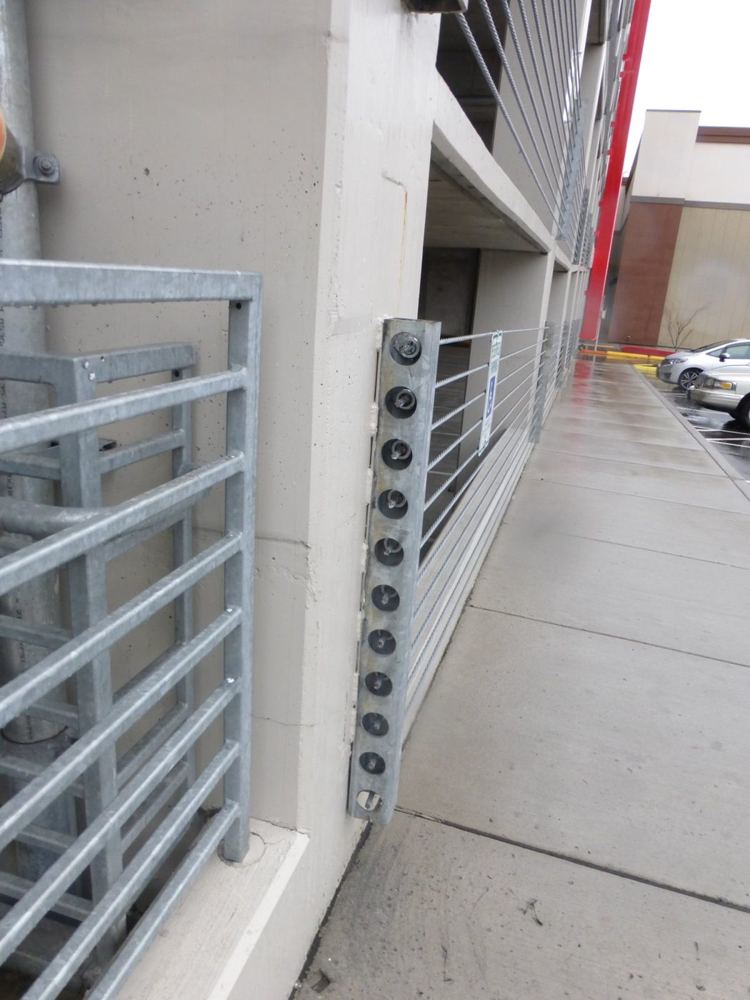
A missing bottom strand at a wall plate. Nobody noticed until we walked it.
This is the PTS approach: field verification before specification, engineering before installation. We measure every single span in the field. We do not assume the garage is uniform, because it never is. Then we build the tension specification around what is actually there.
Anchorage: The Barrier Cable Failure Point Nobody Photographs
A barrier cable is only as strong as what it is anchored to. In post-tensioned and conventionally reinforced parking structures, anchorage conditions break down over time. Concrete spalls. Inserts corrode. Embedments work loose. Water gets in and does what water does.
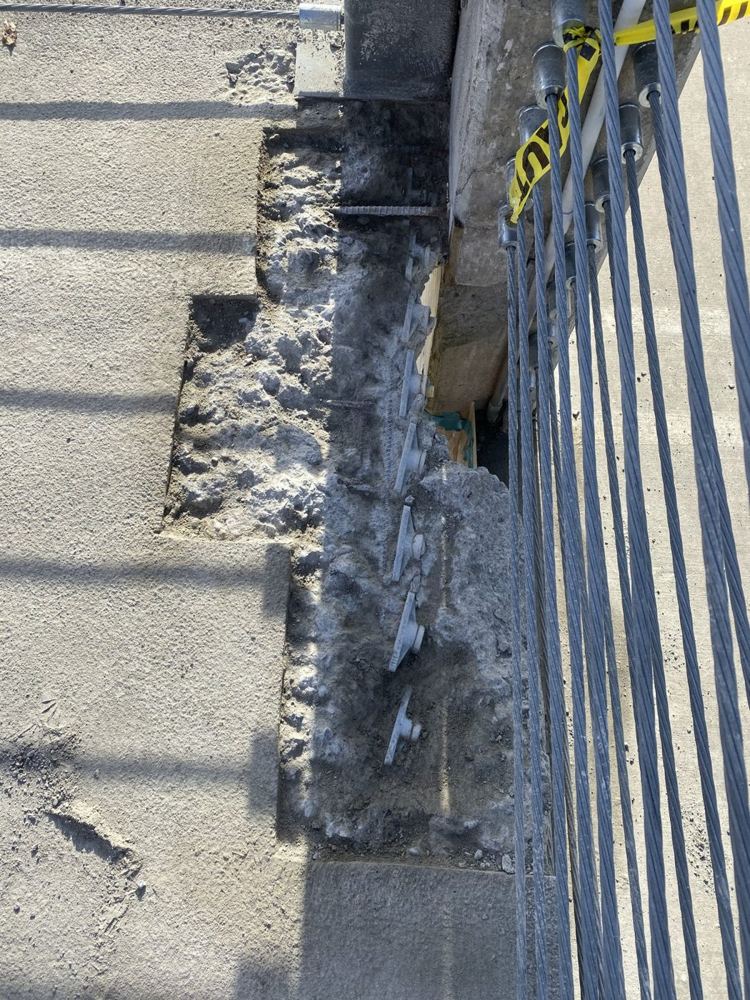
Chip back the concrete and the truth shows up. These anchors were holding the whole system.
Putting a brand new cable on a failed anchorage is cosmetic work. It looks good on the invoice and it looks good from the parking stall. It does nothing when a car hits it.
Before we tension a single cable, we evaluate the anchorage. That means probing, testing, and when it is called for, bringing in engineering review of the connection to the host structure. Skipping this step is the most common reason barrier cable systems fail, and the most common starting point for owner liability after a vehicle breach.
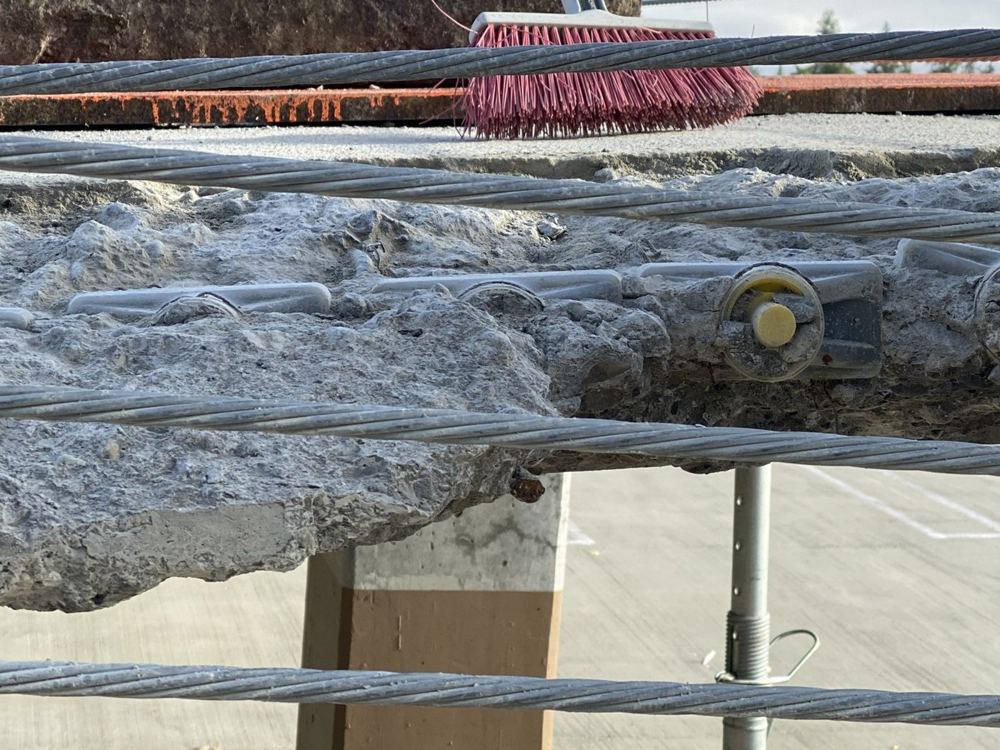
Deteriorated concrete around the anchorage. A new cable here without anchorage repair is money down the drain.
Warning Signs Your Parking Garage Barrier Cable Needs Repair
If you own, manage, or are building out a parking structure, walk your decks and look for these:
-
Cables you can pull or push more than a few inches by hand
-
Rust staining or bleeding around anchor plates and pockets
-
Spalled or cracked concrete at columns, walls, or spandrel beams where cables anchor
-
Missing, cut, or crossed strands
-
Loose or corroded wedges and anchor hardware
-
Cables that were never re-stressed after a concrete repair
-
No inspection records on file for the barrier cable system
If you checked even one of those boxes, it is time to get a real barrier cable contractor on that deck.
What the Right Barrier Cable Contractor Actually Hands You
Here is what an experienced barrier cable contractor brings to your project:
-
A documented tensioning specification for every span, not one number for the whole garage
-
A field verified anchorage assessment before any cable goes up
-
Load rated hardware matched to the system design
-
Stressing and inspection records the building owner keeps for the life of the structure
They understand that a retrofit on an irregular existing structure is an engineering exercise, not a hardware install.
The wrong contractor brings a spool of cable and a torque wrench.
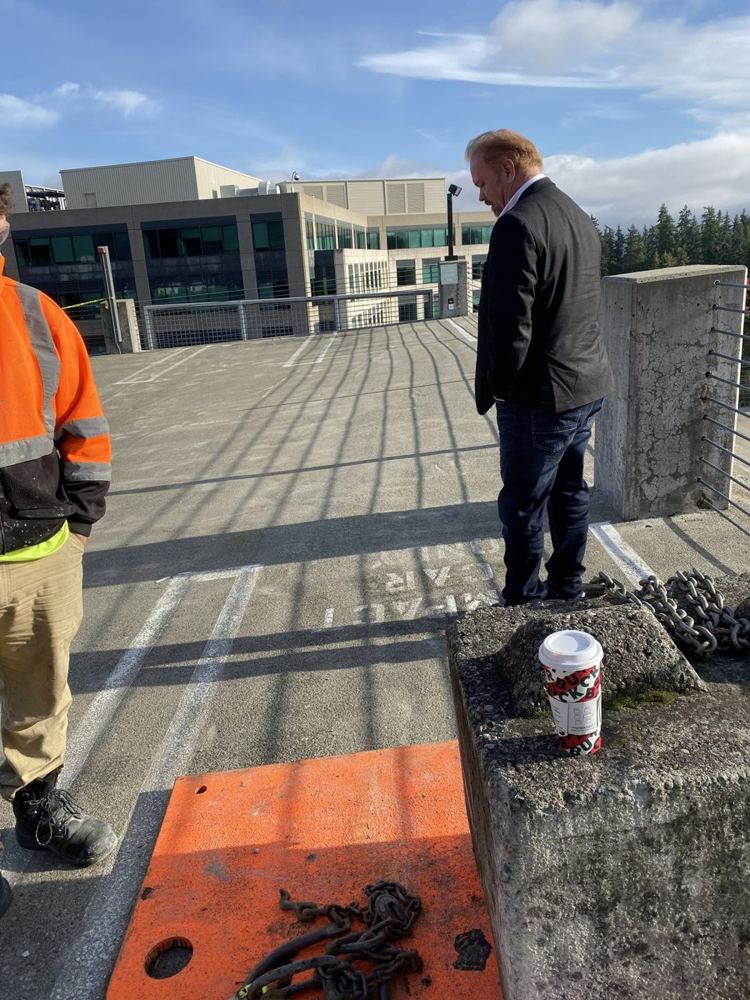
Rick Thompson, founder and CEO of Post Tensioning Solutions, walking the deck with the project team. Every job starts with boots on the concrete.
New Construction Barrier Cable Installation Done Right the First Time
Repair is only half the story. The best time to get barrier cable right is before the concrete is ever poured. On new parking structures, we work with the general contractor and the engineer of record to get anchor locations, embedment, and span layout nailed down in the formwork, so the system goes in clean and stresses to spec.
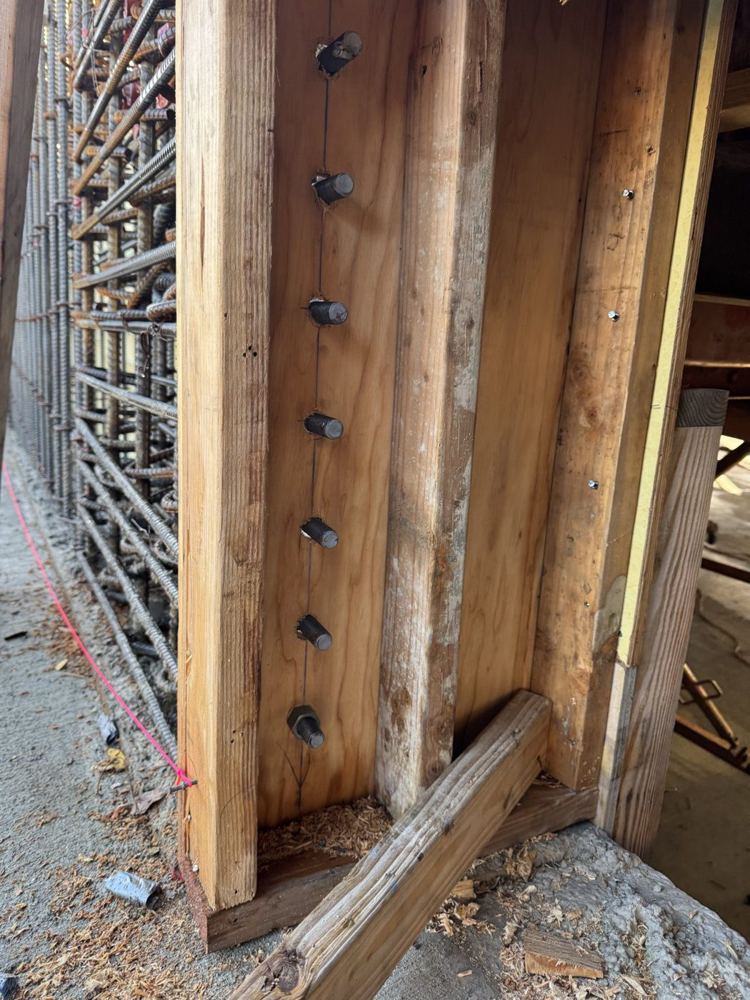
Barrier cable anchors set in the column forms on a new transit parking garage in Auburn, Washington.
For general contractors, that means one less trade to chase at the end of the job, no surprises at inspection, and a barrier cable package that shows up with the paperwork already done. You have put years into winning and building that project. We are here to protect that work, not add risk to it.
Why General Contractors and Owners Call PTS
Rick Thompson founded Post Tensioning Solutions, and our team has spent decades around post-tensioned concrete. PT repair, forensic investigation, anchor relocation, new construction PT, and barrier cable installation and verification. We know what is behind the concrete because we have spent our lives cutting into it and putting it back together.
When a GC is staring down a failed barrier cable inspection, or an owner just found out their garage has not been looked at in twenty years, we are the call that gets the job back on track. We treat every client like a partner who has already invested a lot to get where they are, because they have.
We take on barrier cable repair, retrofit, and new installation projects across the United States. Parking garages, transit facilities, casinos, hospitals, office campuses, and mixed use structures. If it has a deck and an edge, we can help.
Barrier Cable FAQs
How often should parking garage barrier cables be inspected?
At minimum, barrier cables should be looked at as part of every regular structural condition assessment, and any time you see slack cables, rust staining, or concrete damage near anchorages. Many owners set up a routine inspection schedule with their engineer. The key is having inspection records on file.
Can you just re-tighten loose barrier cables?
Sometimes, but only after you know why they went slack. If the anchorage has failed or the span was never designed right, re-stressing the cable fixes nothing. We verify the span and the anchorage first, then stress to a documented specification.
What load does a parking garage vehicle barrier have to resist?
Under the International Building Code and ASCE 7, vehicle barriers for passenger vehicles must resist a 6,000 pound horizontal load applied between 18 and 27 inches above the deck. Your engineer of record confirms the exact requirements for your structure and jurisdiction.
Do you install barrier cable outside the Pacific Northwest?
Yes. We are based in Auburn, Washington, and we travel for barrier cable repair, retrofit, and new construction installation projects nationwide.
See it live on 18 November
On Wednesday 18 November at noon Pacific, Rick is walking through barrier cable: what to check on your own decks, and what a proper repair includes. 45 minutes, with live questions.
See it explained live on Wednesday 18 November. Save your seat.
Get Your Barrier Cable Project on the Schedule
Whether you are a general contractor with a new parking structure going up, or an owner with a garage that needs a hard look, we want to hear from you. The edge of that deck is not forgiving. Neither is the liability that follows when the system fails. Let us make sure yours holds.
Post Tensioning Solutions
130 37th St NE, Auburn, WA 98002
Office: (253) 737-5167 | contact@posttensioningsolutions.com
Posted in PT Fundamentals