


Enhancing buildings with reliable post-tensioning systems and support. Committed to safety, value, and collaborative project success.
Get in touch
(253) 737-5167
130 37th St NE Auburn, WA 98002, USA
Nobody was supposed to be able to do this job the way we did it

by Shaun Thompson
Nobody was supposed to be able to do this job the way we did it
Nobody was supposed to be able to do this job the way we did it.
The standard approach to relocating post-tensioning anchors in a fully post-tensioned building means shoring the entire structure and then detensioning the cables. Done wrong, that alone can seriously damage the building or injure someone. Then you cut through the slab and move floor by floor: pour, restress, repeat. We're talking weeks of added time. Every other trade at a standstill. A project frozen while the PT work catches up.
Howard S. Wright came to us with Microsoft Building 122 in Redmond, Washington. More than 1,200 tendons had to be de-tensioned and re-anchored. The building was fully post-tensioned. And the project schedule could not wait.
My father Rick Thompson, our industry colleague Greg Redmond, and I looked at what the industry said couldn't be done, and we built a better way.
See the whole job live on 21 October. Save your seat
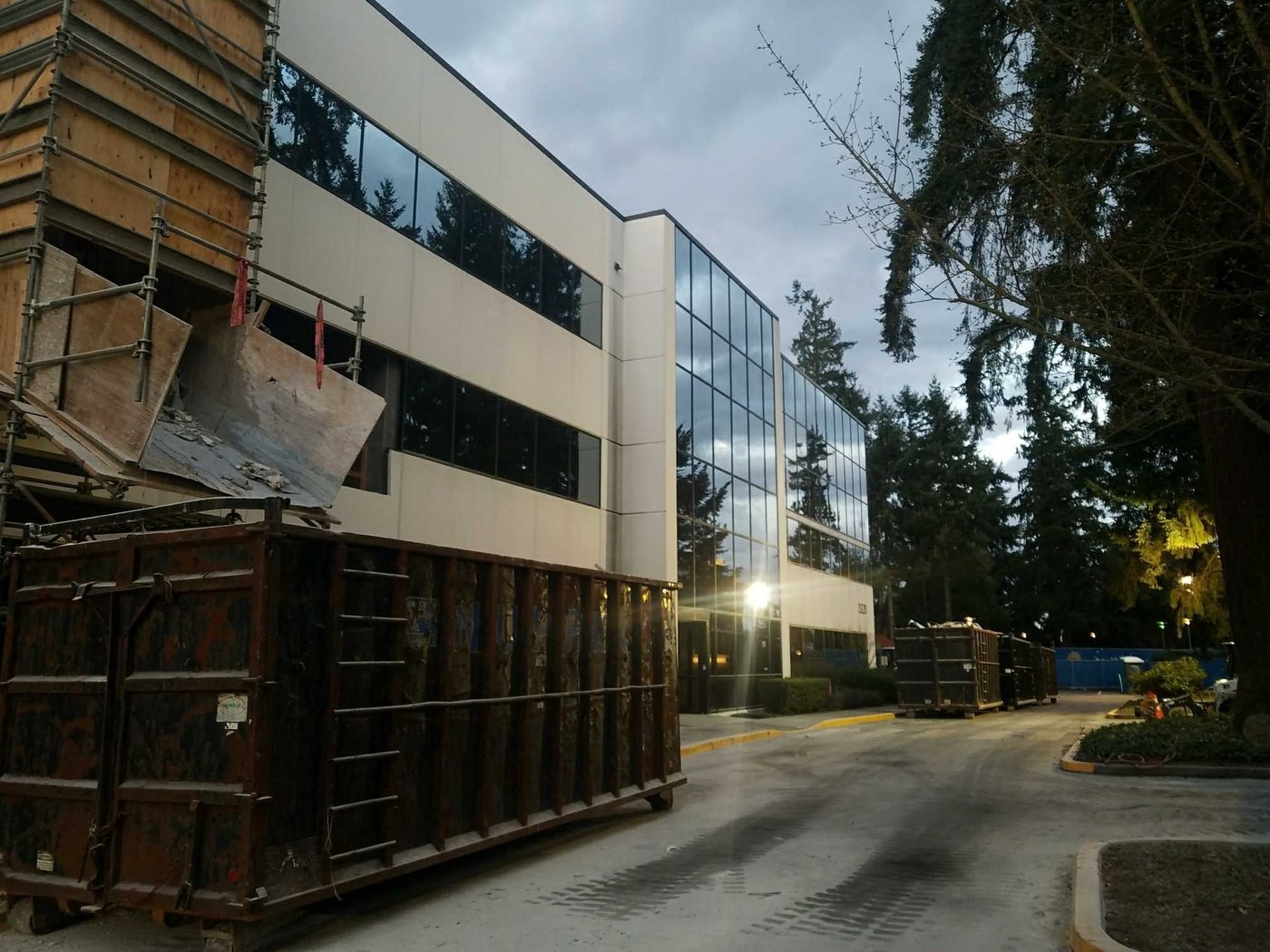
Microsoft Building 122, Redmond, early in the PTS scope, 2018.
What made this job different
Post-tensioning anchor relocation in a fully active construction environment is one of the most technically demanding scopes in structural retrofit work. The tendons running through that slab are under enormous force. Every decision you make around a live tendon carries real consequence.
What Rick, Greg and I developed was a controlled detensioning method that did not require chipping out massive volumes of concrete or bringing in specialized equipment that would have ground the project to a halt. Our system was safe, precise and clean. It protected the wedges, because there is nothing worse in this work than losing wedges out of the slab edge, and it let every other trade on the job keep moving without interruption.
Other trades kept moving. Howard S. Wright kept their schedule. And we worked through every anchor, floor by floor, skylights to stairwells, three-level HVAC openings and all.
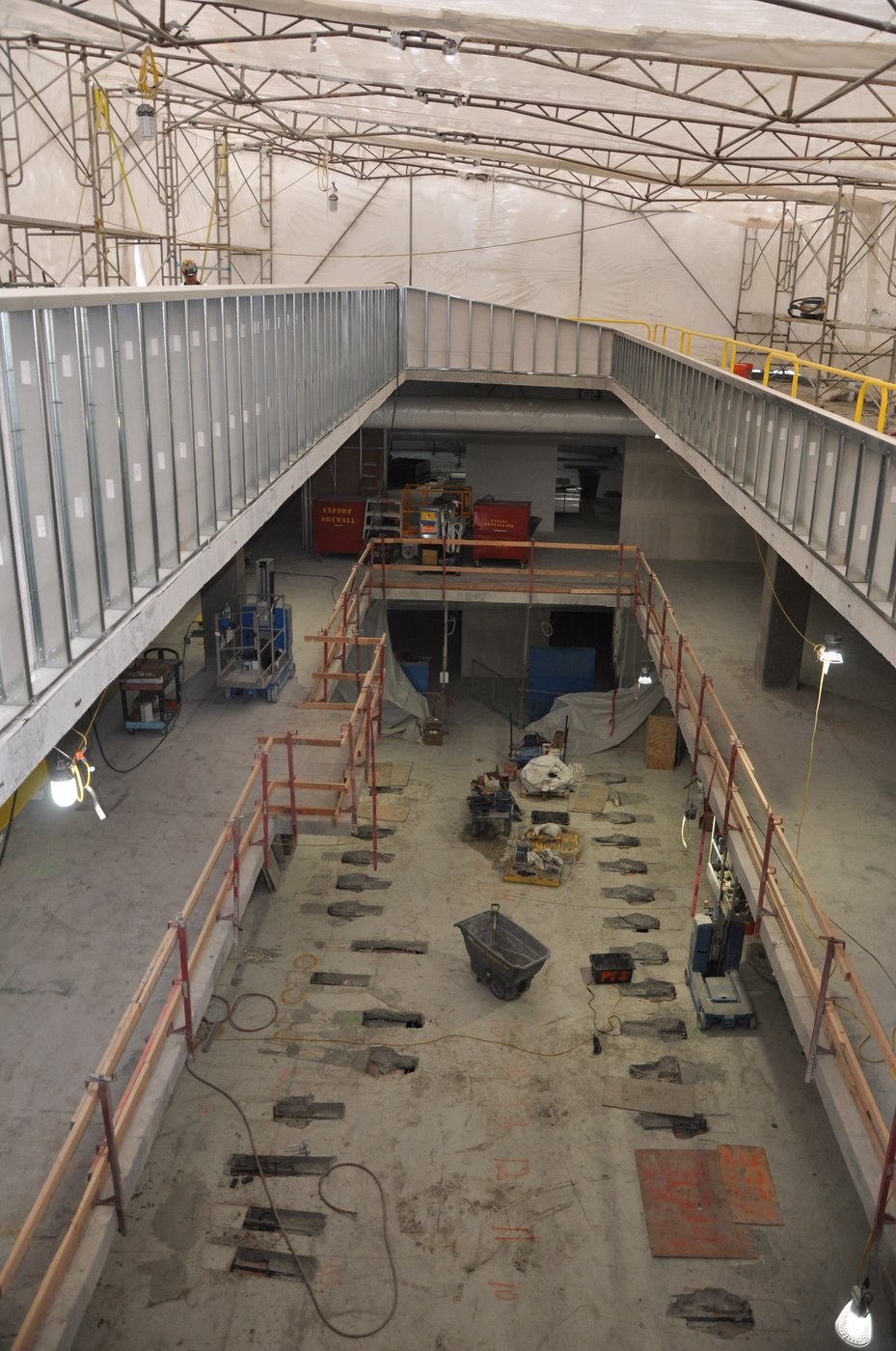
Every rectangular opening is a PT anchor pocket worked by the crew. More than 1,200 across multiple floors, with no shoring and no other trade stopping.
The innovation at the core of it
The original anchors on Building 122 were non-encapsulated: aged, corroded, and in some cases extremely difficult to access. Removing the intermediate wedges cleanly on hardware that old takes patience, the right approach, and the right tool. So Rick, Greg and I built one. A custom tool and process that turned what would have been a slow, damaging operation into something repeatable and fast.
Chipping around live PT cables is not a task you hand to someone who hasn't been trained on exactly this kind of work. One wrong move and you cut a live tendon. Out of more than 1,200 tendons on this job, we broke one cable. One. That is a number I am still proud of, and it reflects the care and precision this crew brought every single day.
I trained every person on that crew from scratch on the specifics of our system. Most of them had never worked a job like this before. By the time we were deep into the scope, they were one of the sharpest, most capable crews I have ever worked alongside.
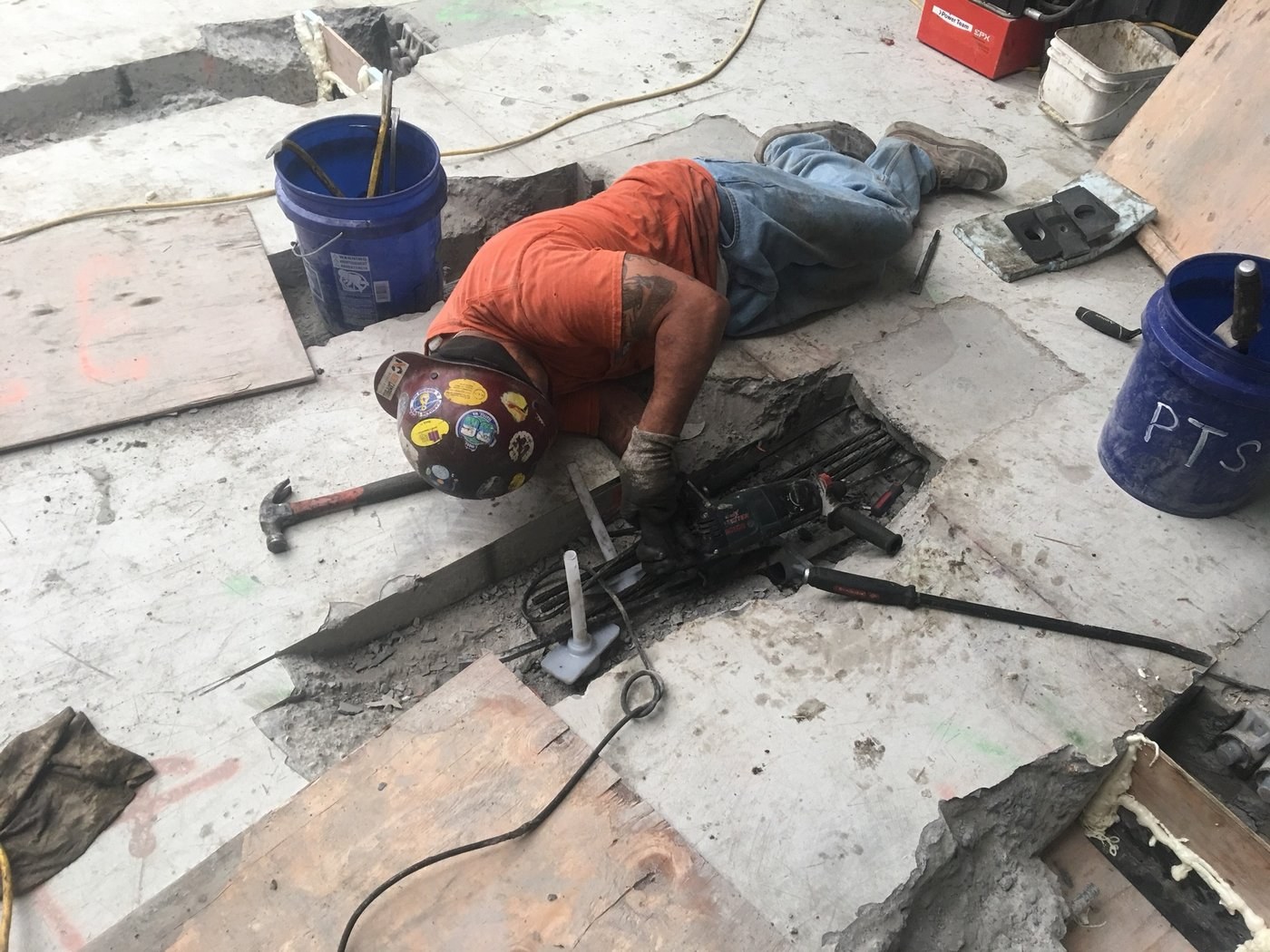
Rick Thompson working an anchor pocket on Building 122, face-down in a freshly chipped opening.
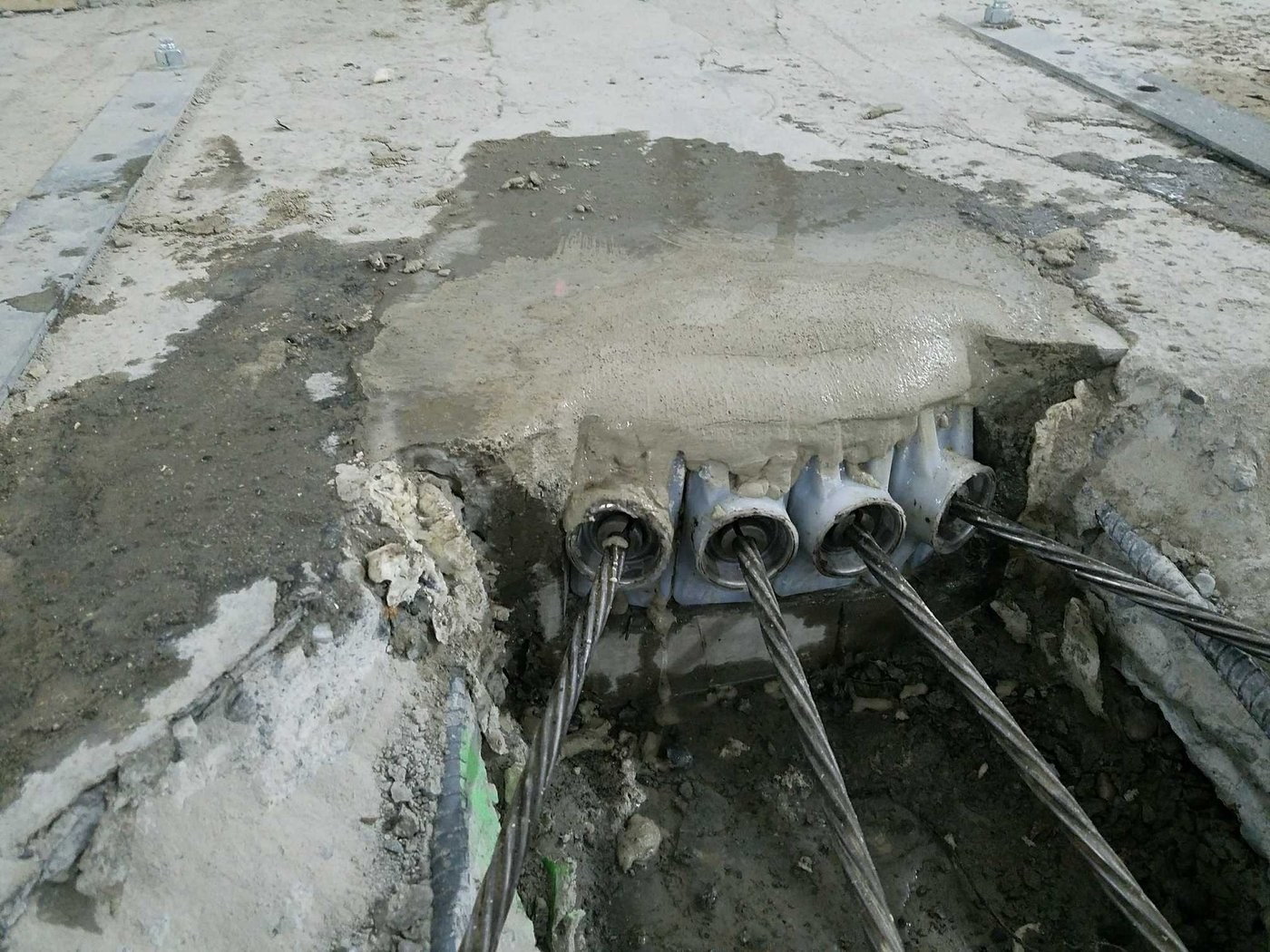
An original anchor assembly exposed after controlled concrete removal. Getting the wedges out of hardware this old took a tool the PTS team built for this job.
Building a crew around an impossible scope
One of the biggest challenges on a job like this is not the technical problem. It is building a crew that can execute it at the pace a major project demands.
As foreman, my job was to take people who had never worked around live PT cables and turn them into a team that could chip to spec, pull wedges cleanly, manage their work around live openings, and keep pace with the Howard S. Wright schedule. That takes time in the beginning. And then it takes trust.
Every Thursday, my dad's wife Cindy brought home-cooked meals to the site for the whole crew. We'd take a longer lunch, sit together, eat together, talk. That culture, the sense that the people leading you actually give a damn about you, shows up in the work. People who feel like they matter take more care with what they build. The results on this job proved that.
This project was also a turning point for me as a leader. Rick and Greg pushed me to stop thinking like an ironworker and start thinking like a planner. How to hold a schedule weeks out. How to manage a large crew without putting your hands on every anchor yourself. That is a hard transition when your identity is tied to building things with your own two hands. But it made me a better foreman, and it made PTS a better company.
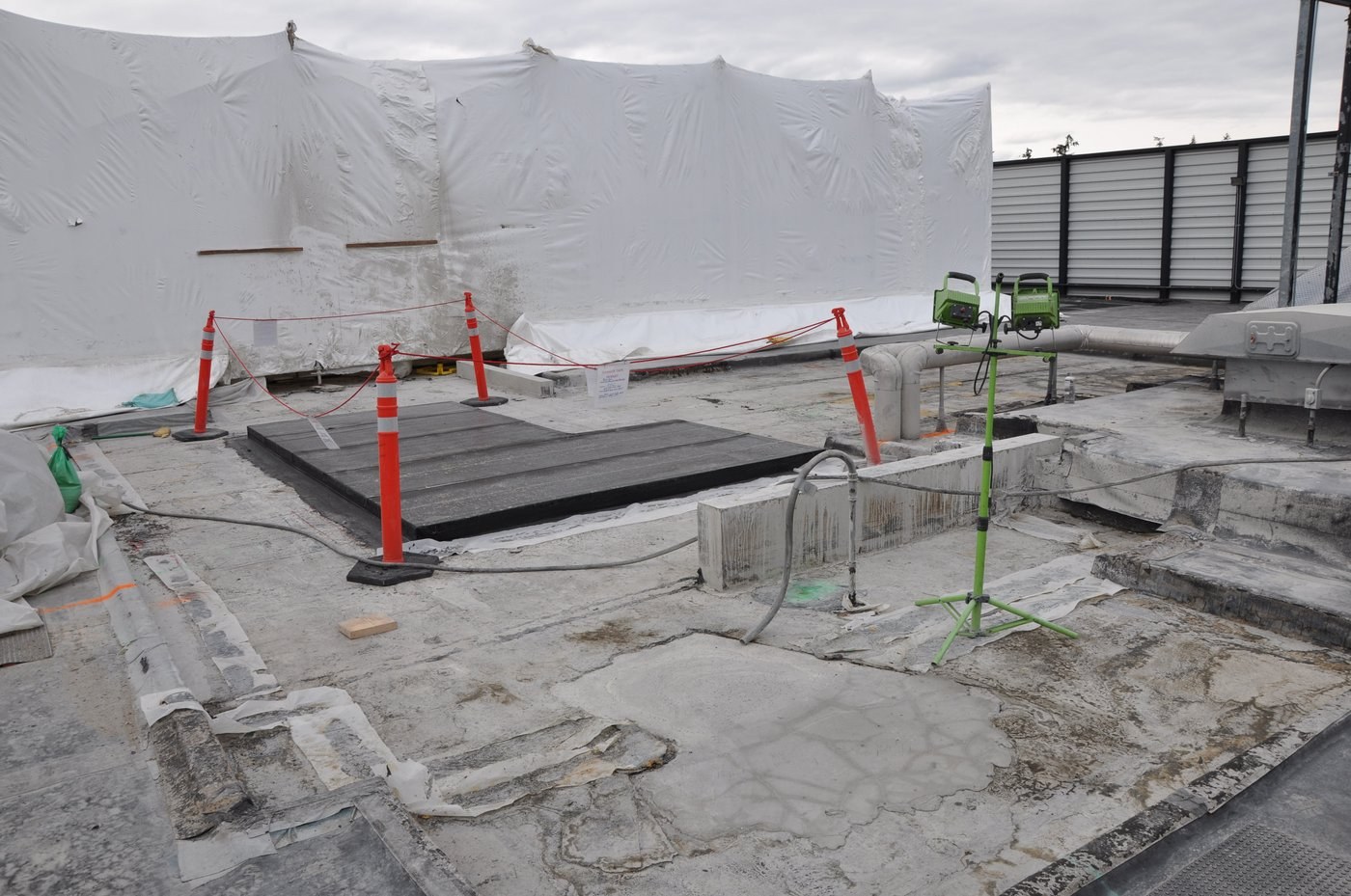
Work underway on Building 122, 2018.
The complexity inside the building
Building 122 was not a simple rectangular floor plate. We were working around skylights, three-level open atriums cut for HVAC units and stairwells, all of it running at the same time as other trades on an accelerated schedule. Routing our scope around live openings, managing material staging and keeping every other crew moving was as much a logistics problem as a technical one.
At peak, the floor looked like a grid of surgical incisions. Precise rectangular pockets, evenly spaced, every one of them a live PT anchor that had to come out clean and get relocated correctly. Nothing about this was fast in isolation. But when you have the right system and the right crew, you build a rhythm. And rhythm on a job this size is what makes the schedule.
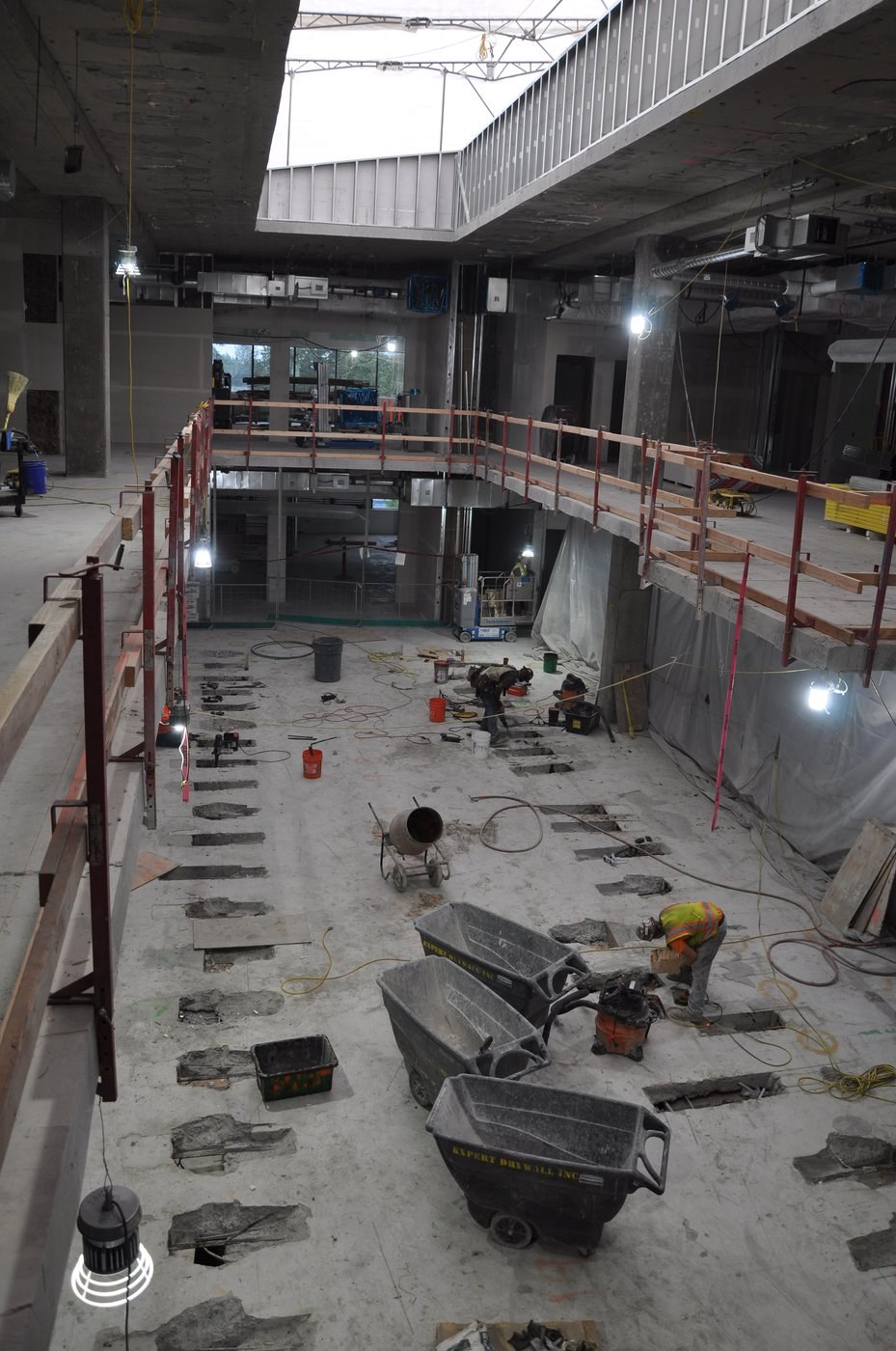
Inside Building 122 mid-job. Multi-level openings, skylight cuts and other trades working at the same time.
The result
When Howard S. Wright finished Building 122, they documented the project in a video. It was the right ending to a job that rewrote what the industry believed was achievable on a fully post-tensioned building.
More than 1,200 tendons de-tensioned and re-anchored in six months. Zero shoring. No trade delays. One broken cable. And a building Microsoft occupies today, full of the natural light those openings were cut for.
The project went on to win the 2019 NAIOP Washington State Redevelopment and Renovation of the Year award and the People's Choice award, and a 2019 Design-Build Institute of America National Award of Merit. Our work made the cover of PTI magazine.
That is what happens when you refuse to accept that the standard way is the only way.
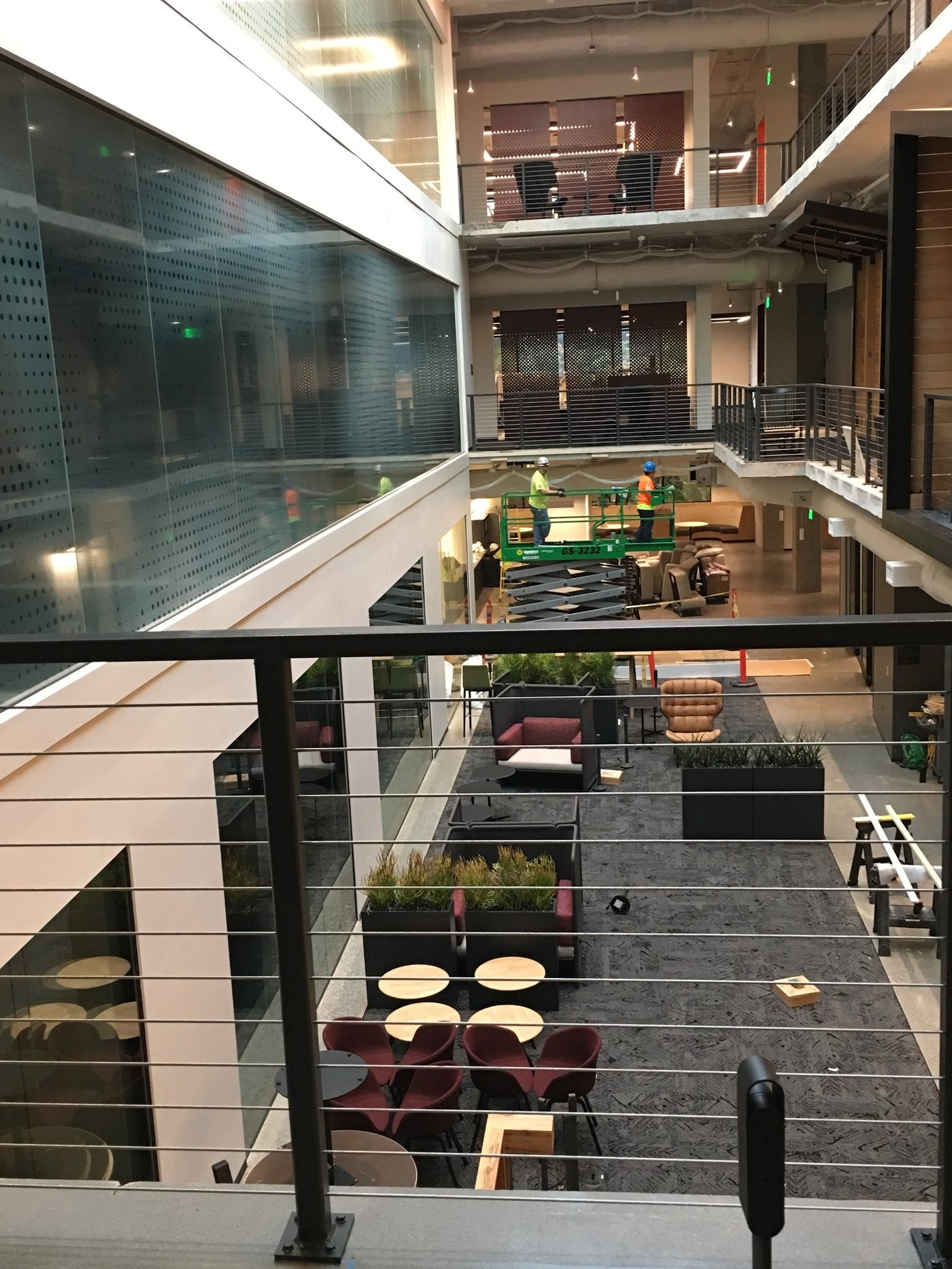
Building 122 finished. The same atrium the crew worked anchor by anchor.
See the whole job on 21 October
On Wednesday 21 October at noon Pacific, Rick and I are walking through Building 122 start to finish, live. What was in the way, what we built to get through it, and four things to check before anyone tells you a change to your building means shutting the job down.
One hour. Thirty minutes presented, thirty for live questions.
Watch the Howard S. Wright documentary on this project: https://www.youtube.com/watch?v=Hw7aTA9EHGc
Summary
How Microsoft Building 122 in Redmond was changed without shoring and without stopping the other trades, with more than 1,200 post-tension anchor pockets worked by the PTS crew. This article walks through what made the job different, what the crew built to get through it, and what to check before you accept that a change will shut your project down.