



Enhancing buildings with reliable post-tensioning systems and support. Committed to safety, value, and collaborative project success.

Get in touch
(253) 737-5167
130 37th St NE Auburn, WA 98002, USA
Post-Tensioning Safety Starts at Home: How a Father and Son Built a PT Crew That Gets the Job Done Safe

by Post Tensioning Solutions
Post Tensioning Solutions (PTS), Auburn, Washington
Rick Thompson founded Post Tensioning Solutions. His son, Shaun Thompson, works alongside him in the office and in the field. Two ironworkers with the same last name, and one rule that hasn’t changed since day one: everybody goes home the same way they showed up.
That rule is the reason for this post. At PTS, post-tensioning safety isn’t a poster in the shop. It’s the way a father taught his son to work, and it’s the way we’ve taught every man and woman who has ever put on a PTS hard hat.
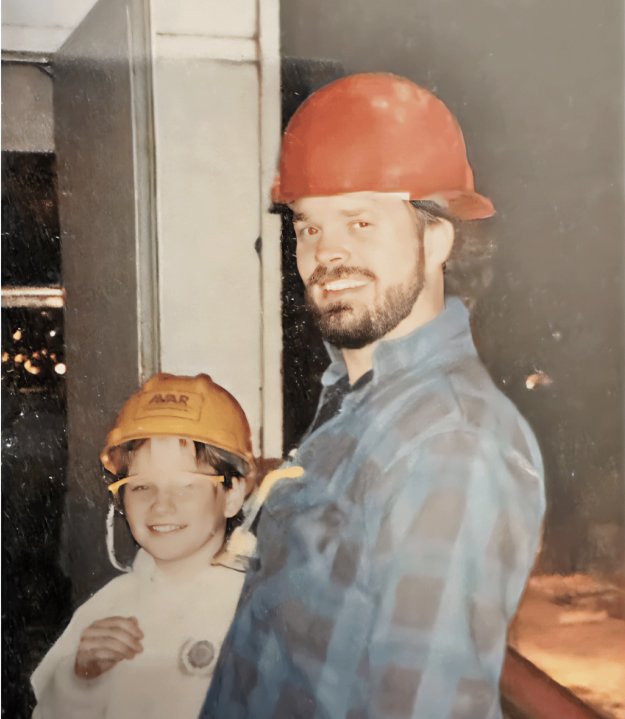
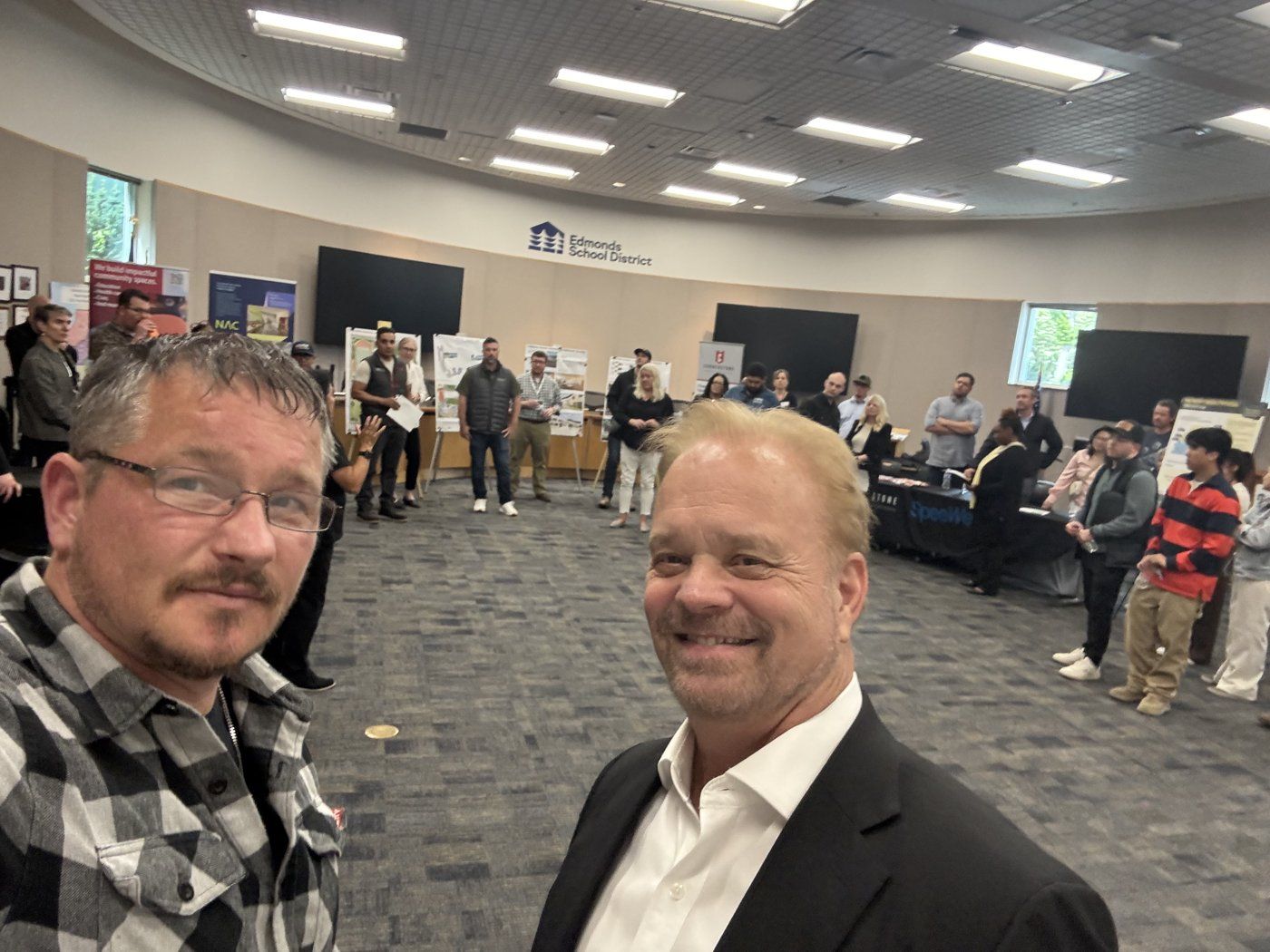
Rick Thompson and Shaun Thompson. Father, son, and the standard behind every PTS job.
Key Takeaways
- Three-layer silica dust control: vacuum at the tool, air scrubbing around the work, and a custom PTS catch system under it.
- Nothing hits the ground: catch tarps, barricaded zones below, and debris bagged and hauled the same day.
- Controlled detensioning, and GPR scanning before we ever cut or core near a tendon.
- Union ironworkers, every one certified: PTI, OSHA 10 or 30, fall protection and lifts, first aid and CPR.
- More than 100 years of combined post-tensioning experience, led by a father and son who still work in the field.
We’ve Seen What Unsafe PT Work Looks Like
Shaun started as an ironworker out of Local 86 and grew up around the trades. Over the years he has walked onto jobs where you couldn’t see the other end of the deck. Not fog. Concrete dust. Crews chipping out anchors with nothing pulling the dust, chunks of concrete falling two and three floors to whoever happens to be underneath, and somebody saying they’re “controlling the silica.”
“That’s not control,” Shaun says. “That’s luck. And luck runs out.”
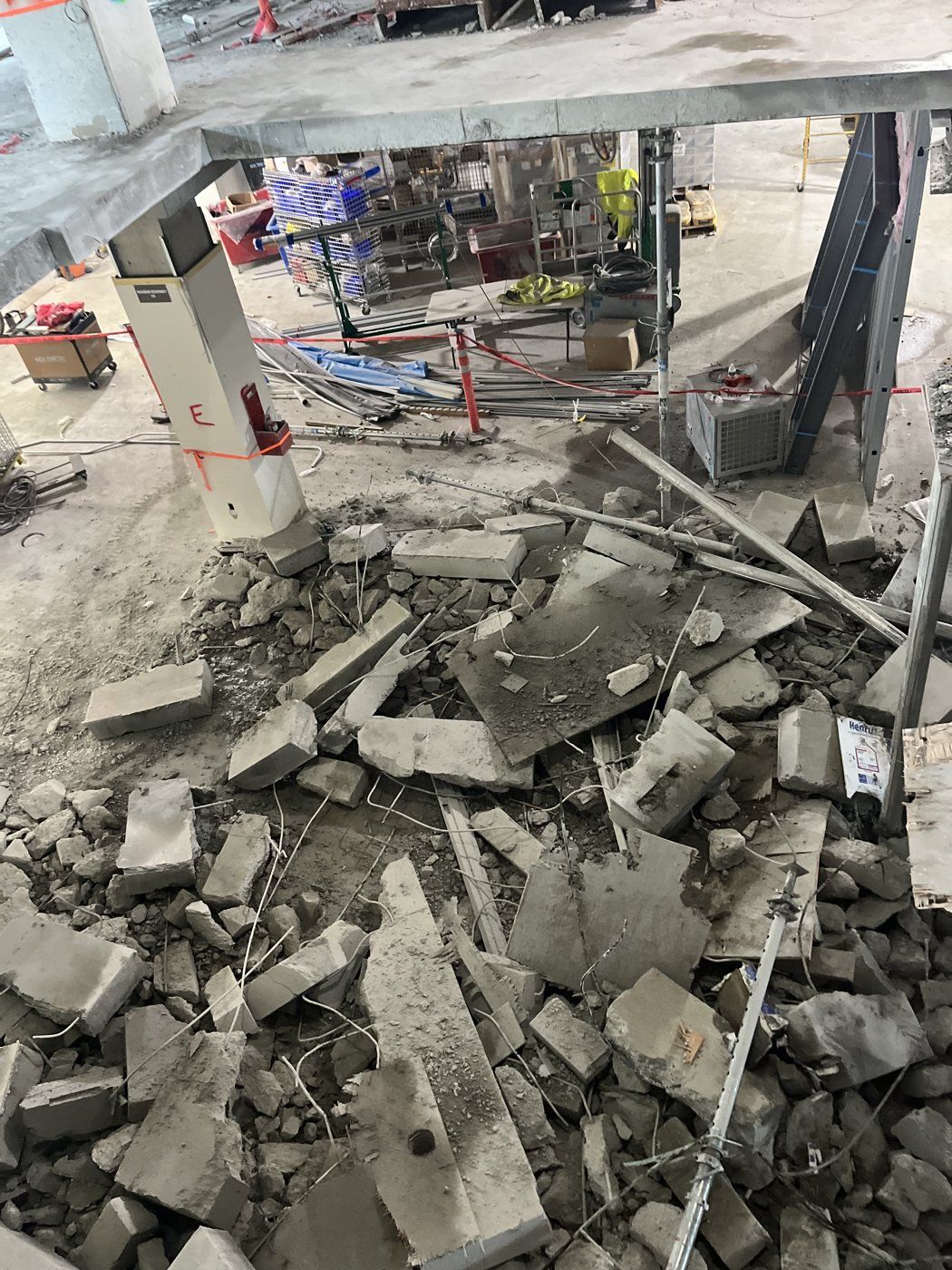
Not one of our jobs. This is what it looks like when nobody controls the debris.
Post-tensioning carries risks most trades never deal with. A single half-inch strand is stressed to roughly 33,000 pounds. Every chip-out puts silica in the air. A lot of our work happens at slab edges, over parking stalls, or inside buildings people are still using. When PT work goes wrong, it goes wrong fast. That’s why we built our whole company around making sure it doesn’t.
A Father and Son Standard
When your company’s name is on the truck, you can’t cut corners.
“My dad taught me that before I ever stressed my first tendon,” Shaun says. “If something isn’t right, you stop. You fix it. You don’t care who’s watching or how far behind the schedule says you are.”
Rick has always been the one pushing the team to try new things and get better. That’s where our patented systems came from, and it’s where our safety methods came from too. Shaun is in the field making sure those methods happen on your deck every single day. Between the two of them, nothing slips through the middle.
There’s a part people don’t always get about a family company: our crew isn’t a headcount. They’re family too. When Rick and Shaun talk about getting everybody home, they mean people they know by name, whose kids they’ve met. That changes how you run a jobsite.
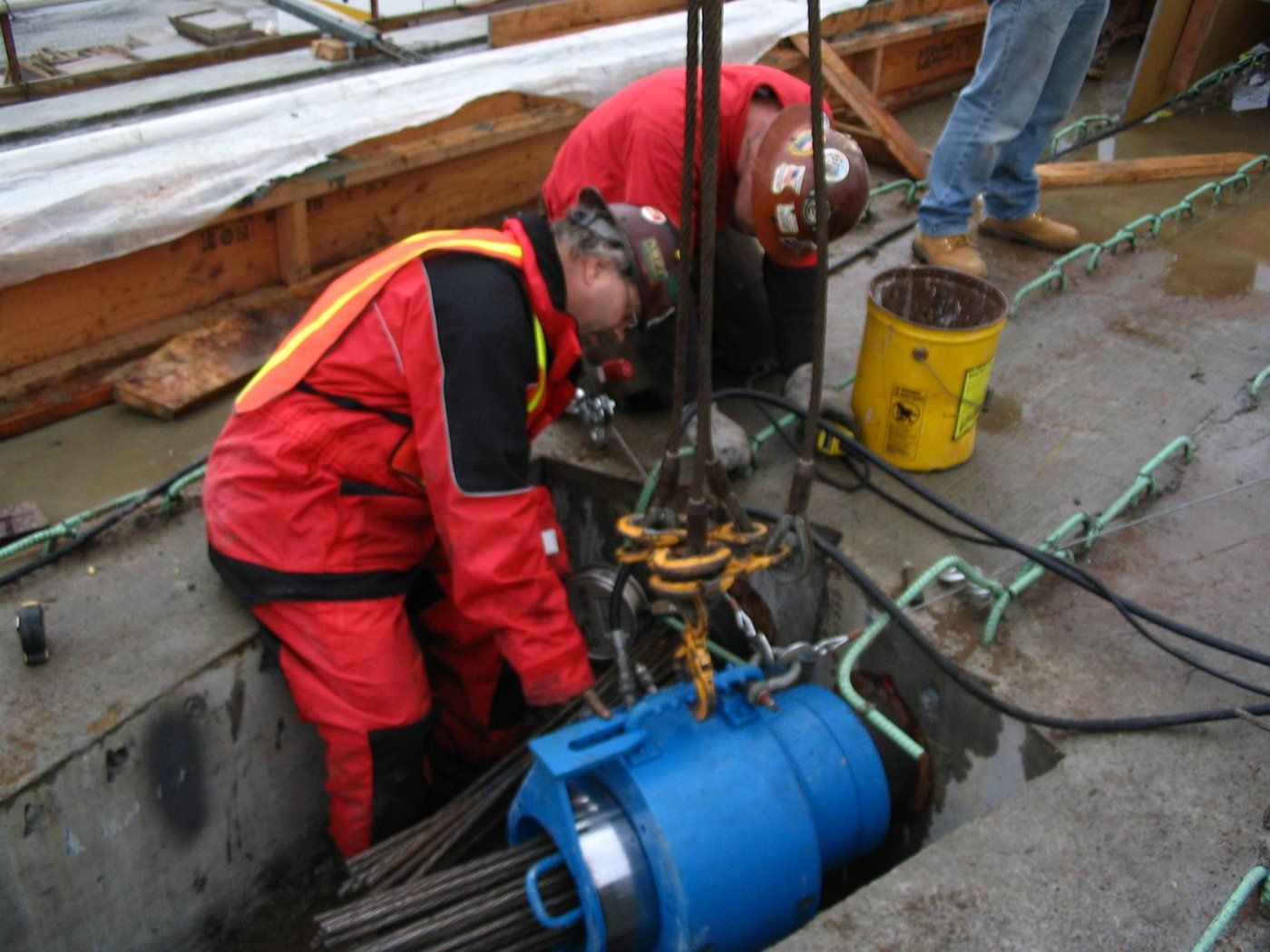
Rick in the hole stressing on a bridge job in 2006. He’s been doing it right since long before it was popular.
You’ve Invested Too Much for One Bad Sub to Wreck It
If you’re a general contractor, an owner, an engineer or an architect, you’ve already put years and serious money into that structure. Design, permits, schedules, tenants, inspections, your name and your reputation. You did the hard part.
When something goes wrong with the post-tensioning, you’re calling us in to rescue a project you’ve worked hard on. The last thing you need is the specialty sub becoming a brand new problem. We treat your project like what it is: something you’ve built, and something worth protecting.
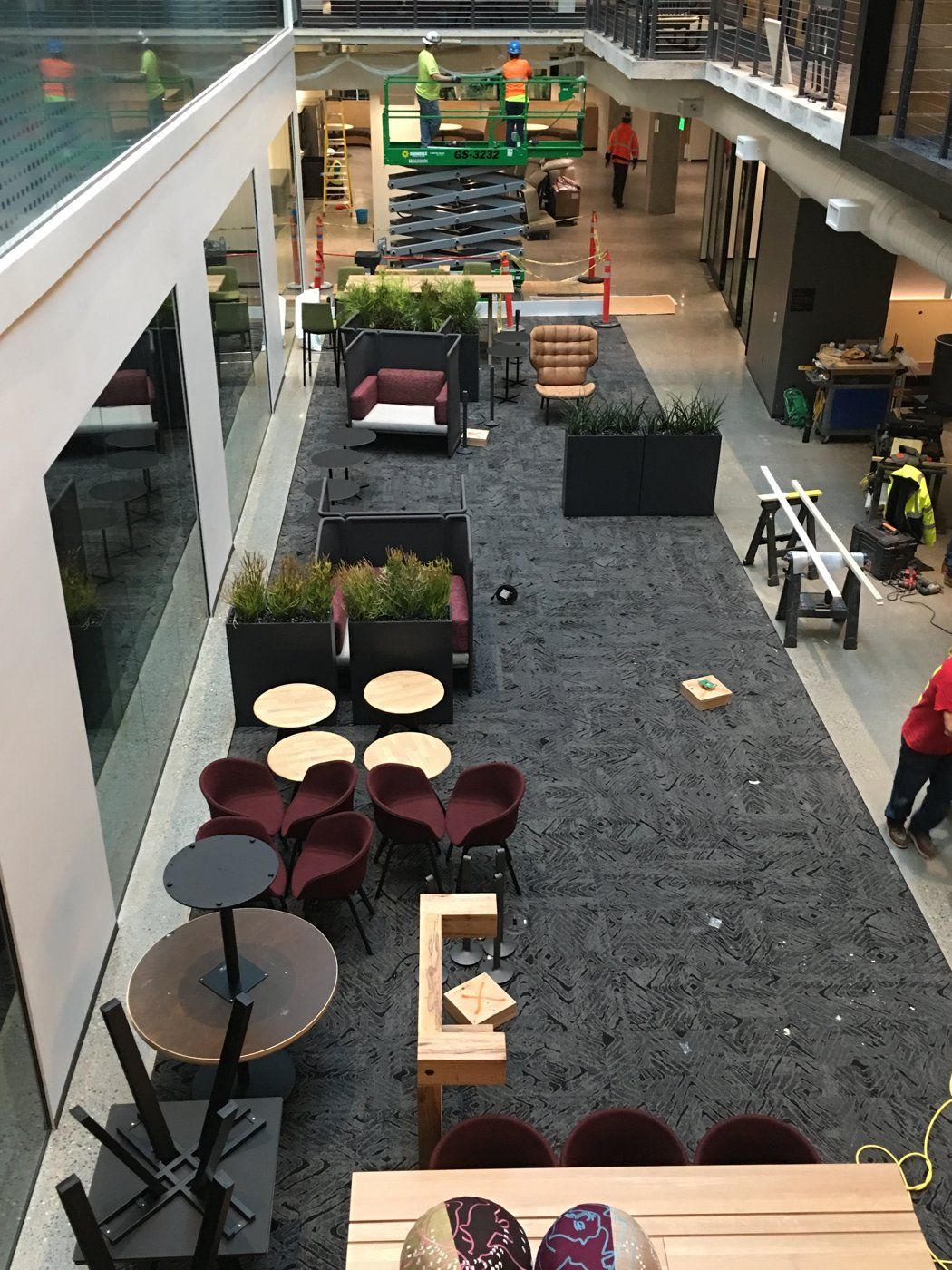
Microsoft Building 122 after the work was done. This is what our clients invest in, and what we protect.
Silica Dust Control on PT Repairs: Our Three-Layer System
When you chip, core or cut concrete, you put respirable crystalline silica in the air. Those particles are small enough to get deep into your lungs, and long-term exposure is tied to silicosis, lung cancer and kidney disease. OSHA’s silica standard for construction caps exposure at 50 micrograms per cubic meter of air, averaged over an 8-hour shift. That’s a speck.
PT repair means chipping concrete around anchors all day. So we didn’t buy a vacuum and call it a program. We built a system that works in three layers:
- At the tool. HEPA vacuum shrouds on our drills, saws, grinders and chipping tools grab the dust right at the bit, before it ever gets airborne.
- Around the work. Our negative air machines pull air from around the chipping zone, so anything that slips past the shroud gets sucked in instead of drifting across the deck.
- Under the work. Our custom PTS-built catch system sits under the repair. Concrete gets caught as it breaks loose. It doesn’t fall to the next level and it doesn’t bounce off a windshield.
Every job runs on a written silica exposure control plan, and our crew works to it. Not a binder in the truck. A plan we actually follow.
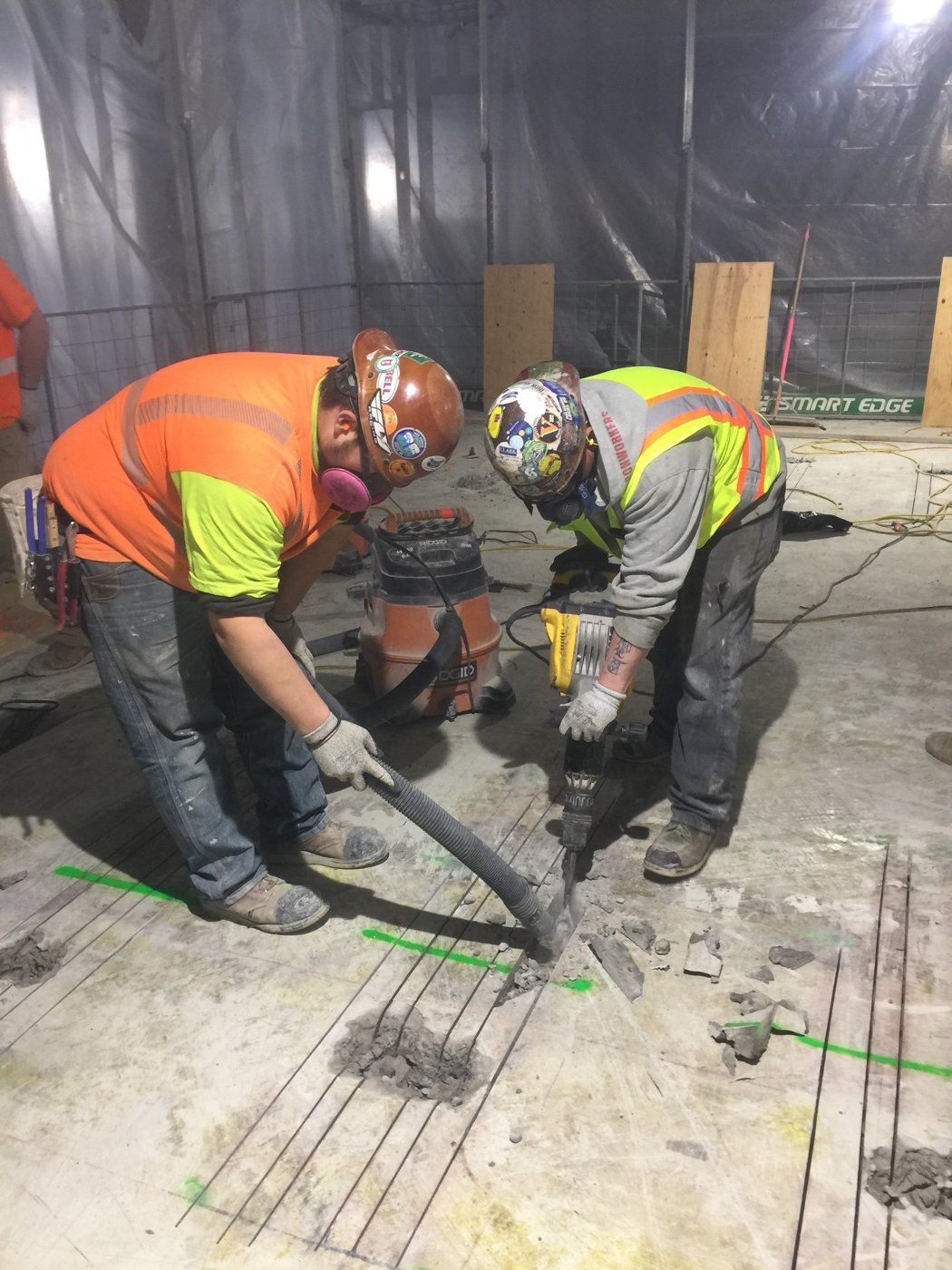
Vacuum right at the chisel point, respirators on, poly containment behind. Microsoft Building 122.
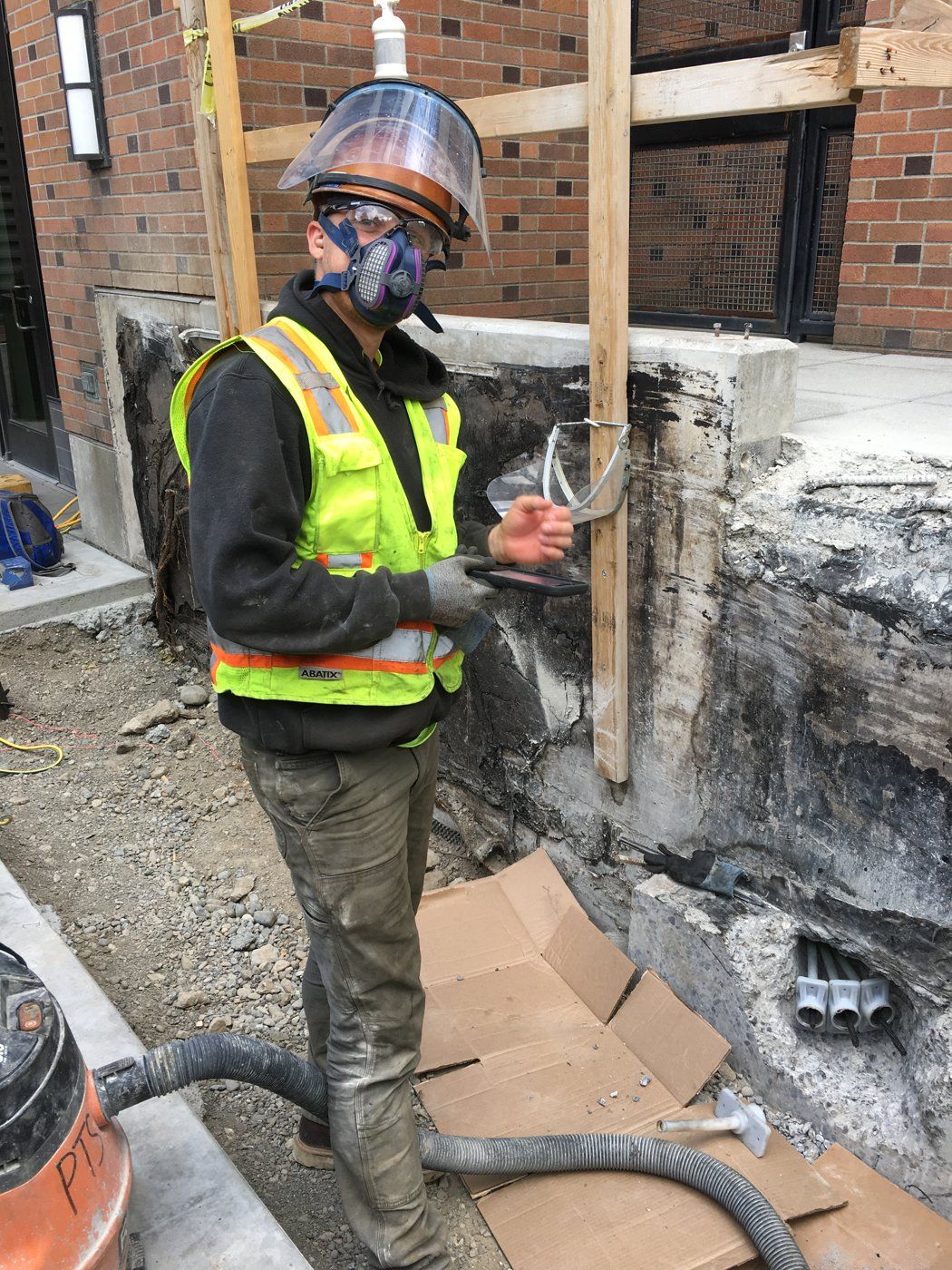
Respirator, face shield, and the PTS vac running at the chip-out. That’s a normal day for us.
Nothing Hits the Ground
Gravity doesn’t care how many years you’ve been doing this. So on every PTS job:
- Catch tarps and nets go under every penetration and every chip-out.
- Exclusion zones get barricaded below and around the work, so nobody wanders under a live repair.
- Debris gets bagged at the point of work and hauled out the same day. It never sits on a deck waiting to get kicked off an edge.
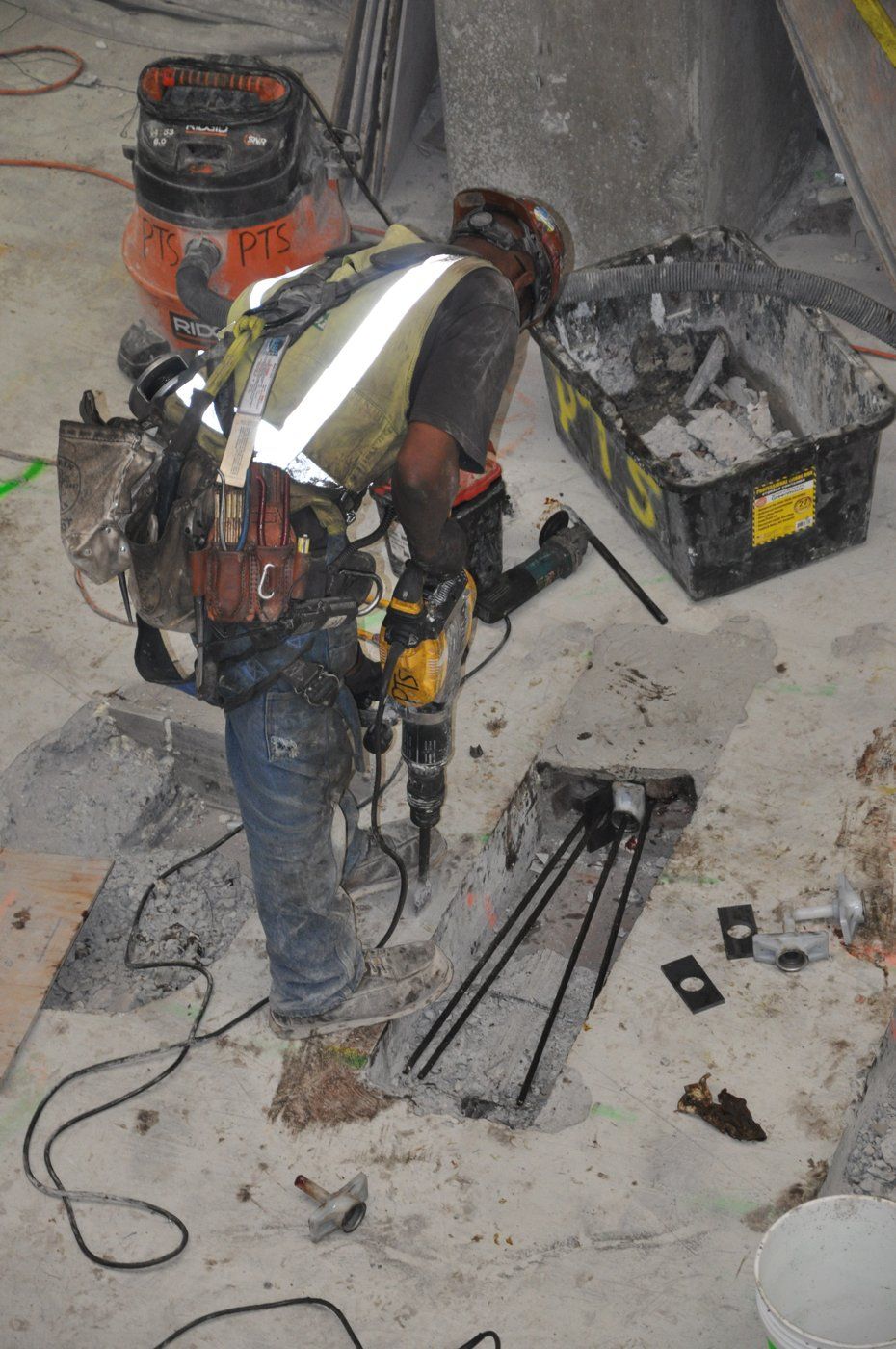
Debris goes straight into the PTS bin at the point of work. The vac sits right beside it.
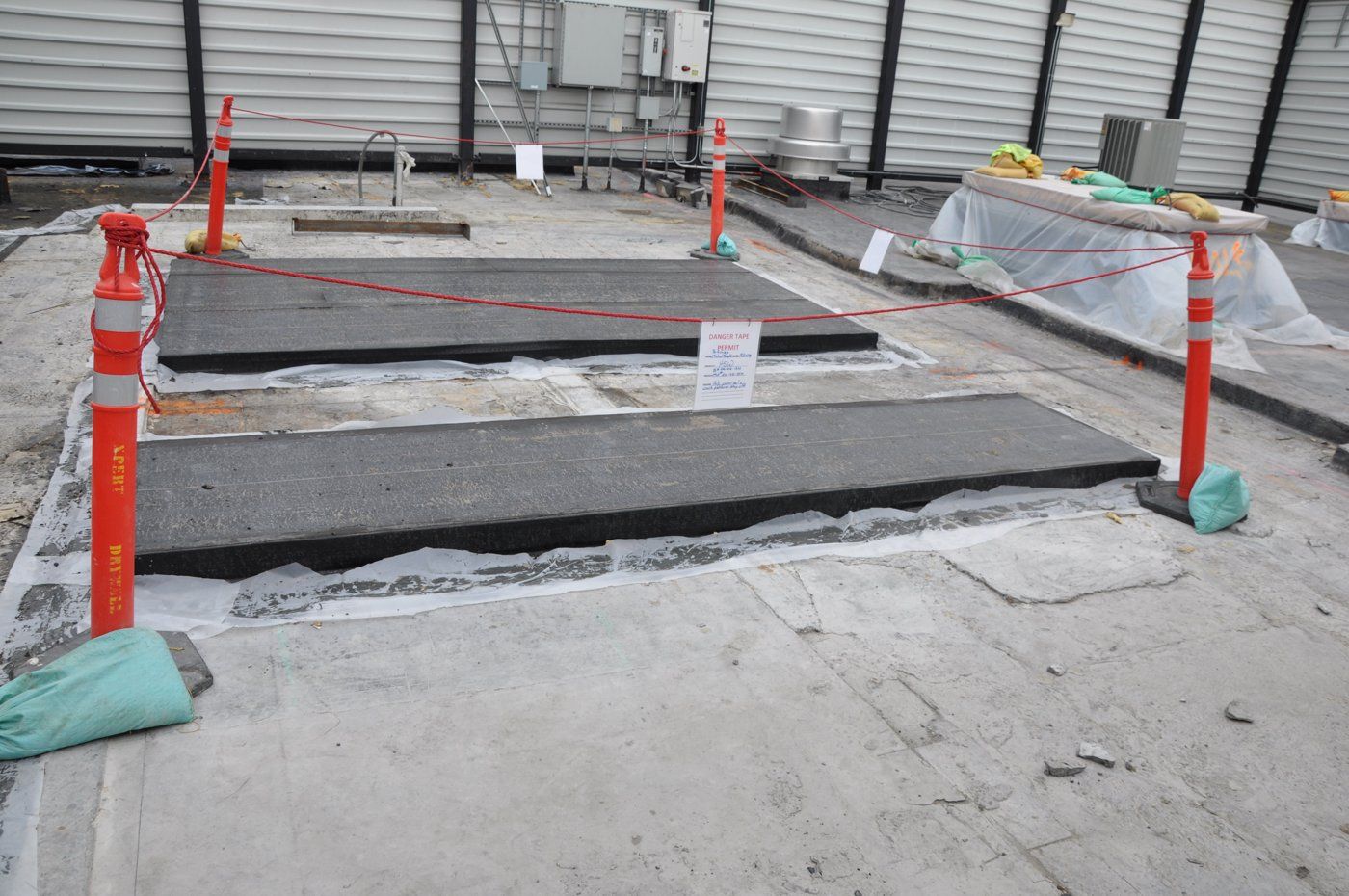
Openings covered, cones up, rope line around the work zone. Nobody wanders in by accident.
Controlled Detensioning and GPR Scanning
Cutting a stressed tendon wrong is one of the most dangerous things that can happen on a PT job. That stored energy has to go somewhere, and sometimes it goes out the end of the slab. We detension in a controlled, planned sequence, with nobody standing where they shouldn’t be.
Before we core or cut anything, we scan. GPR scanning before every penetration means we know where the live tendons are before a bit ever touches the concrete. No surprises. Surprises are how people get hurt, and how jobs get shut down.
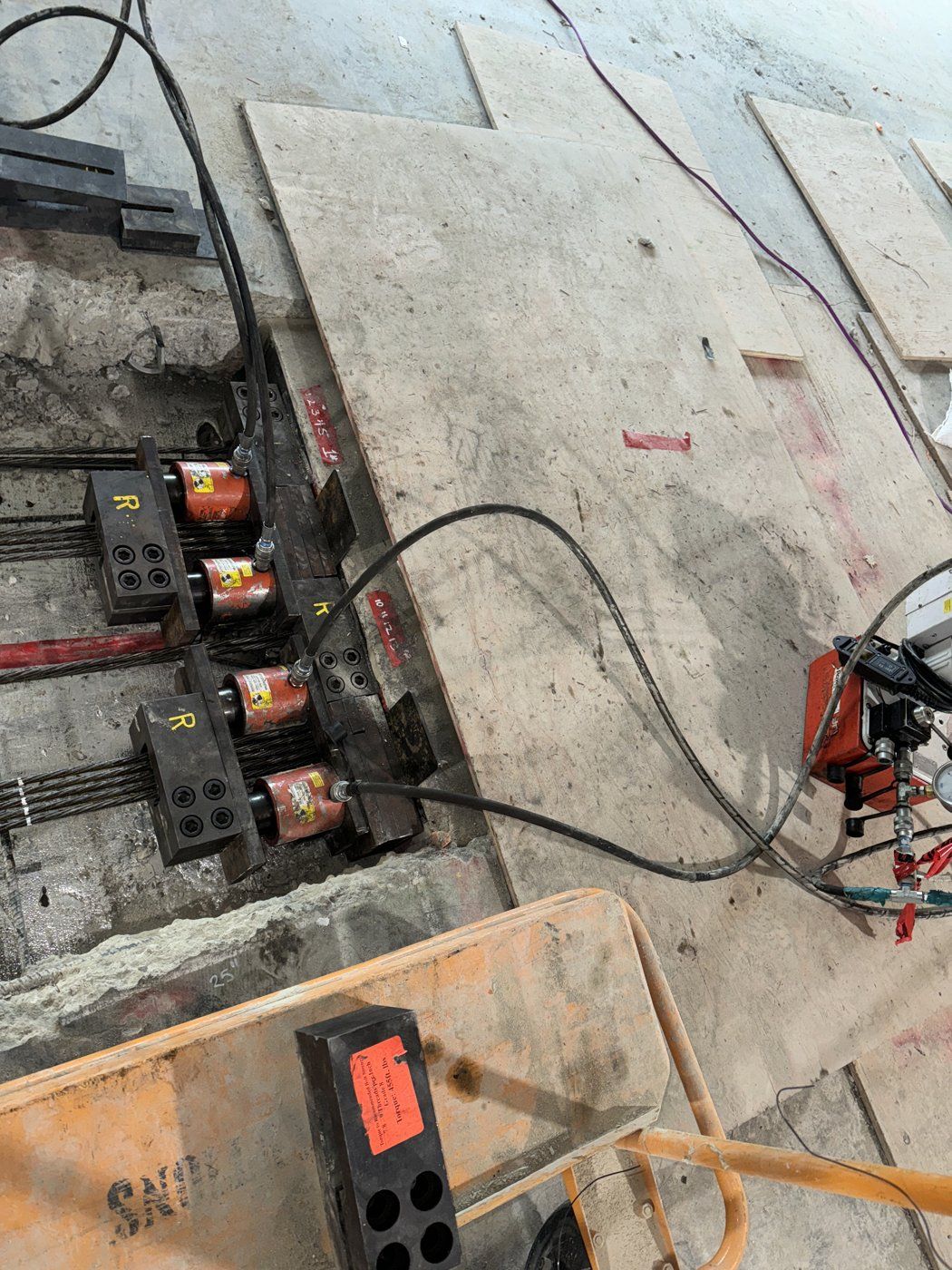
Controlled detensioning setup. The force comes off slow and planned, not all at once.
Every Person on Our Crew Is Certified
A lot of outfits have one certified foreman and a crew hoping he’s paying attention. Not us. Our crew are union ironworkers, and every person we put on your job holds:
- PTI certification
- OSHA 10 or OSHA 30
- Fall protection and aerial lift training
- First aid and CPR
Put it all together and our team carries more than 100 years of combined post-tensioning experience. That’s 100 years of watching other people make mistakes, so you never have to pay for them.
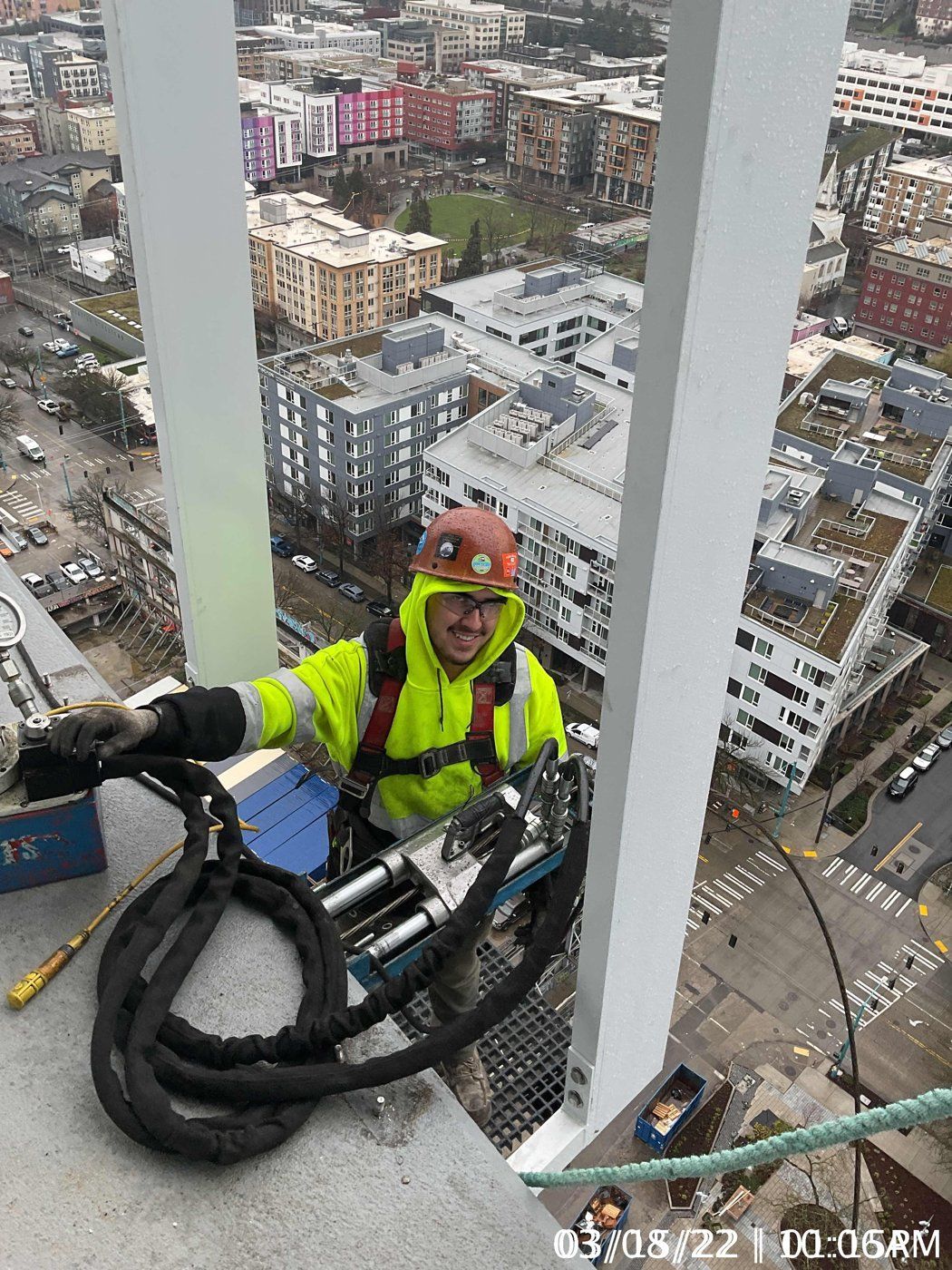
Jose tied off on the angel wing, high over Seattle. Fall protection is not optional.
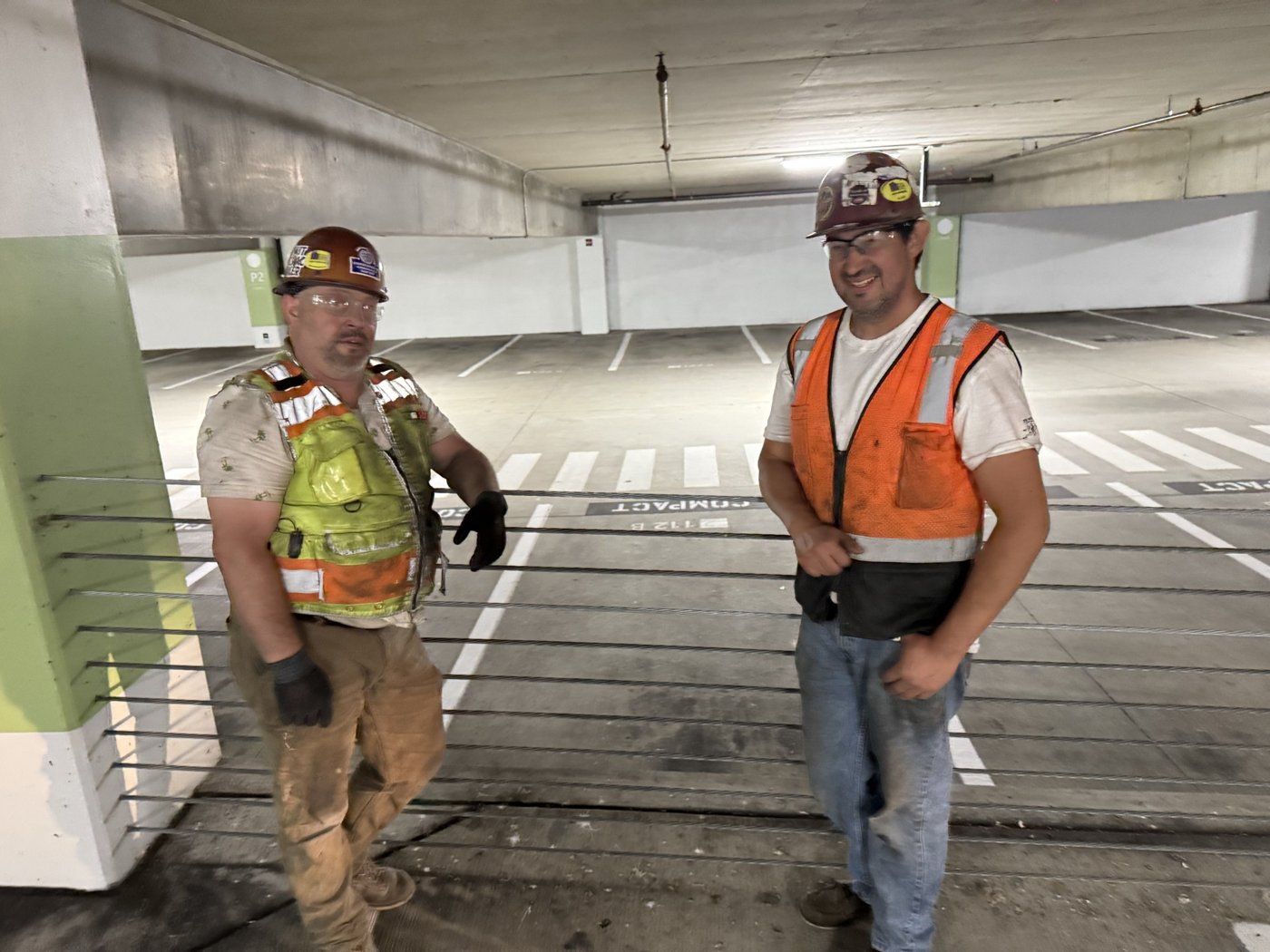
Part of the crew that carries those 100-plus years.
Are We the Safest PT Company in the Industry?
We’ll be straight with you. Nobody hands out a trophy for that, and we don’t trust anybody who claims it without backing it up. Here’s what we can back up.
We haven’t had an injury in ten years. Every person on our crew is certified. Every job runs on a written silica plan. Our debris doesn’t hit the ground. And Rick and Shaun are still out on the decks themselves.
You can judge the rest for yourself. Walk one of our jobs. Ask the general contractors we’ve worked for. Then walk the next PT job down the street and compare.
The Questions Contractors, Engineers and Architects Ask Us
These are the real concerns we hear before a job starts. Here are straight answers.
“Is all this safety going to slow down my schedule?” It’s the opposite. When debris is caught and collected as it falls, there’s barely any cleanup at the end of the day. Our no-shoring retrofit methods keep other trades working around us. And scanning before we cut keeps a surprise tendon strike from shutting your whole job down. Safe work is fast work, because you only do it once.
“Am I going to be cleaning up after you?” No. We bag it and haul it the same day. You get your deck back the way you gave it to us, minus the problem.
“Will your crew work inside my site safety program?” Yes. We work as an extension of your team. Your site rules are our site rules, and our standards get stacked on top of them.
“Can you work in an occupied building or an open parking garage?” That’s most of what we do. Containment, dust collection at the tool and barricaded zones keep tenants, drivers and your finishes protected while we work.
“What documentation will I get?” (Engineers ask this one.) Tension logs, detailed scan reports, CAD and Revit exports, and load test certifications when the job calls for them. Our work meets or exceeds IBC, PTI and ASTM standards, so you have what you need to sign off and pass inspection.
“Are you properly insured for this work?” Yes. PT repair is specialty work and we carry the coverage it demands. Ask us for certificates before we mobilize. We’d rather you ask.
5 Questions to Ask Any PT Contractor Before They Touch Your Slab
Screenshot this and send it to your project team:
- How do you control silica, at the tool and around the work?
- Where does the concrete go when it breaks loose?
- Is every person on your crew certified, or just the foreman?
- How do you detension, and who’s standing where when you do?
- Do you scan before you core?
If you get a shrug on any one of those, call us.
Post-Tensioning Safety FAQ
What are the biggest safety hazards in post-tensioning work?
The big three are the stored energy in stressed tendons, respirable silica dust from chipping and coring concrete, and falling debris or falls from edges. A good PT contractor has a specific plan for each one.
How do you control silica dust during PT repair?
At PTS we use three layers: HEPA vacuum shrouds at the tool, negative air machines around the work zone, and a custom catch system under the repair, all backed by a written silica exposure control plan.
Why does PT contractor certification matter?
PT work involves forces and failure modes that general concrete crews aren’t trained for. PTI certification and OSHA training mean the person cutting into your slab knows exactly what’s inside it and how to handle it.
Is it safe to cut a post-tensioned slab?
It can be, when it’s done right. That means scanning with GPR first, planning the penetration with the engineer, and detensioning in a controlled sequence when tendons have to be cut.
Where does PTS work?
We’re based in Auburn, Washington and take on post-tensioning repair, barrier cable and retrofit projects across the United States.
Join Rick and Shaun on December 23: Home for the Holidays
We picked December 23 on purpose. Two days before Christmas, everybody’s thinking about getting home to their family. That’s exactly what this webinar is about.
Rick and Shaun will walk through everything in this post live: our dust collection system, how we keep materials off the ground, controlled detensioning, and what certification actually means on a jobsite. Bring your toughest questions.
Wednesday, December 23, at noon Pacific.
Save your seat for the December 23 webinar
Somebody’s Waiting at Home
Rick built this company on doing it right when nobody’s watching. Shaun has spent his career making sure that never changes.
Your building matters. Your schedule matters. But the worker on the lift, the tenant in the garage and the electrician two bays over matter more. Somebody’s waiting for every one of them to come home tonight.
We make sure they do. That’s a promise from our family to yours.
We Stress Excellence.
Planning a PT repair, retrofit or barrier cable job? Call PTS at (253) 737-5167 or email contact@posttensioningsolutions.com.